Showing posts with label crossing borders. Show all posts

April 18: Hear Steve Smith explain why Mexico is in crisis, and why we should care

Dr. Steve Jones of IUPUI discusses the causes and possible solutions of Mexico's crises

When: Wednesday April 18, -- talk 11-12, lunch 12:00-12:45
Where: North United Methodist Church, N. Meridian St. at 38th St.

The results of Mexico’s presidential election are nearly too close to call, how will this result effect the new Mexican administration’s policies? Can Felipe Calderon successfully reform Mexico’s policies on energy, trade and border security and strengthen relations with the United States?

Dr. Steven Jones, is Coordinator of the Office of Service Learning in the Center for Service and Learning (CSL) at Indiana University-Purdue University at Indianapolis (IUPUI). Prior to joining CSL, he was the Associate Director of the Integrating Service with Academic Studies project at Campus Compact from 2002-2004. Steven received a Ph.D. in political science from the University of Utah in 1995 and was an associate professor of political science at the University of Charleston from 1995-2002 where he also served as the Director of the Robert C. Byrd Institute for Government Studies. He edited the second edition of Campus Compact’s Introduction to Service Learning Toolkit and is a co-author of two other Campus Compact monographs, The Community’s College: Indicators of Engagement at Two-Year Institutions and The Promise of Partnerships: Tapping into the Campus as a Community Asset. His most recent publication, with Jim Perry, Quick Hits for Education Citizens, is part of FACET's Quick Hits Series.

Steve's talk is part of the Mid-North Shepherd Center's Great decisions series. Questions? Contact 317-924-0959 or mnscenter@aol.com

April 25: Susan Erickson discusses why we need to care about migration in a global economy

IUPUI's Susan Erickson explains why we need to care about migrations other than from Mexico to Indianapolis

When: Wednesday April 25, talk from 11 to noon, lunch from noon to 12:30

Where: Where: North United Methodist Church, N. Meridian St. at 38th St.

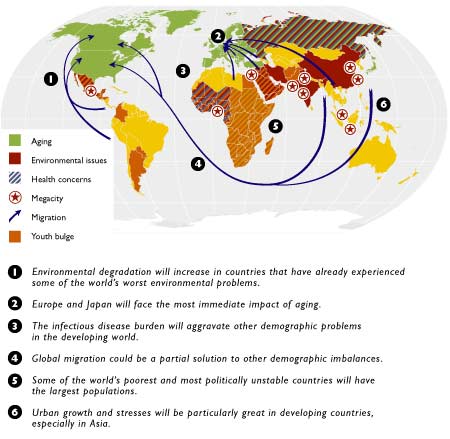
The movement of people across international borders can be initiated by conflict, economic reasons or the chance to achieve political freedoms. Migration issues have taken center-stage in the U.S. and EU, as citizens increasingly worry about job security and terrorism. What are the advantages and disadvantages for countries that are affected by migration?

Although Susan Erickson specializes in American politics, particularly in campaign finance and the media's role in politics, she also teaches courses on international relations and Asian politics. She has carried out extensive research in Taiwan, Hong Kong, Hungary, and Poland. Ms Erickson frequently appears as a political commentator on television, and is a great favorite of the Mid-North Shepherd Center's Great decisions series. Questions? Contact 317-924-0959 or mnscenter@aol.com.

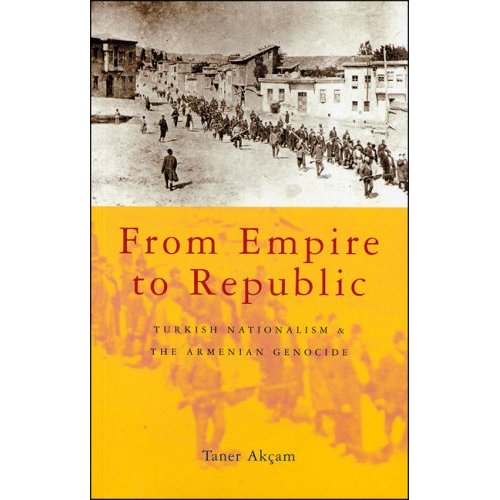
February 22: Listen to Taner Akçam, the Turk who believes in the Armenian Genocide

Taner Akçam, one of Turkey's most historians, comes to the Indianapolis Committee on Foreign Relations's dinner to discuss "The Armenian Genocide and the Question of Turkish Responsibility"

When: Thursday February 22, 5:45 refreshments; 6:30 dinner; 7:30 presentation
Where: Five Seasons Country Club, 1300 E. 96th St.

Here's the publisher's description of his book, From Empire to Republic: Turkish Nationalism and the Armenian Genocide:

The murder of more than one million Armenians by the Ottoman Turkish government in 1915 has been acknowledged as genocide. Yet almost 100 years later, these crimes remain unrecognized by the Turkish state. This book is the first attempt by a Turk to understand the genocide from a perpetrator's, rather than victim's, perspective, and to contextualize the events of 1915 within Turkey's political history and western regional policies. Turkey today is in the midst of a tumultuous transition. It is emerging from its Ottoman legacy and on its way to recognition by the west as a normal nation state. But until it confronts its past and present violations of human rights, it will never be a truly democratic nation. This book explores the sources of the Armenian genocide, how Turks today view it, the meanings of Turkish and Armenian identity, and how the long legacy of western intervention in the region has suppressed reform, rather than promoted democracy.

For a taste of the controversy Akçam inspires, visit his book's page at amazon.com and read the reviews by readers.

To RSVP for this important event contact Courtenay Weldon at Courtenay@cweldon.net.

Return to IndyBuzz List of Events for Spring

Return to IndyBuzz Themes for Events in the Spring

January 19: Explore the roots of racial confrontation and discontent in France with Didier Gondola

Prof. Didier Gondola of IUPUI helps explain the roots of ethnic identity and conflict in Africa

When: Friday, January 19 4:30 PM
Where: IUPUI Cavanaugh Hall room 508

As part of IUPUI's School of Liberal Arts Sabbatical Speakers Series, Prof. Didier Gondola will give a talk on “Transient Citizenship: The Othering and Indigenization of Blacks and Beurs within the French Republique” Here's Prof. Gondola's description:

Riots in 2005 wreaked havoc in several French banlieues [French suburbs that feel more like inner city slums than US suburbs such as Carmel]. This led some black and beur [second and third generation French who roots are in North Africa and other parts of the former French Empire] civic organizations — including “les Indigènes de la République” — have attributed the anger fueling the riots to the persistence of colonial relations between France and its population of African descent, the so-called français issus de l’immigration (first- and second-generation French) as opposed to Français de souche (“native” French). Needless to say, most French pundits and scholars quickly dismissed such an explanation not only as flawed but dangerous as well, a cipher likely to drive a wedge into French society. Instead, these pundits have turned the table on the rioters by putting forth arguments that range from the breakdown of African families living in France, to polygamy, rap music, and more generally their unwillingness or inability to assimilate as more accurate explanations for their marginalization.

Prof. Didier Gondola is a highly
regarded
professor of history at IUPUI. Born the Congo and raised in Paris, Prof. Gondola is the author of The History of the Congo. For more information, contact: Annette Hill, 317-278-1839.


If this event sounds interesting, you should check out a couple of films at the IMA about the African experience elsewhere: from Brazil see "Favela Rising" February 8; from Mexico see "African Blood" February 22. For a sense of why Algerians might not be happy with the French, see the classic film Battle of Algiers March 22.

Return to IndyBuzz List of Events for Spring

Return to IndyBuzz Themes for Events in the Spring

February 2: Find out what happened to the Balts who went back

IUPUI sociologist Ain Haas ponders the complexities of recently liberated Latvia and Estonia's returning diaspora

When: Friday February 2 4:30 PM
Where: IUPUI, Cavanaugh Hall 508

In this iteration of the IU School of Liberal Arts Sabbatical Speaker Series, “Return Migration to Post-Soviet Estonia and Latvia” IUPUI Professor of Sociology Ain Haas examines the experiences of first-, second-, and third-generation exiles/emigrants of Estonian and Latvian heritage (primarily political refugees and their descendants), who returned to their ancestral lands when the Soviet regime collapsed. The talk is based on personal interviews with some 130 returnees covered their reasons for moving, adjustment to life in the Baltic countries, and comparisons with their old life in the West. It is a topic close to Ain's heart since he himself is of Estonian descent.

It's topic I find fascinating ever since working in the three Baltic countries in the early 1990s. The 2nd and 3rd generation Latvians and Estonians resembled Jews emigrating to Israel in the 1940s more than émigrés returning to the other newly democratic East European countries. They had been born in the US or Canada or Sweden, had attended language classes every weekend, and Latvian camp in Michigan the summer (I don't know if the Estonians had a similar summar camp), and the annual song festivals around the world. They had been inculcated form the time they could talk with a mission: the Soviets are wiping out our people at home, you are the sole hope of preserving our language and culture. So when Latvia and Estonia became independent, it was almost instinctual for a lot of these kids to take their freshly minted BAs from Indiana University to Riga or Tallinn, and to offer generously to run the countries. The Latvians and Estoians who had remained in the homeland during the Soviet occupation received these kids -- filled with naive idealism I think more than opportunism -- with mixed feelings. (And the Russians who'd moved to the Baltic republics during the half century of incorporation in the USSR wanted nothing to do with these often nationalistic outsiders.) Fascinating to watch, very different from the situation at the same time in Lithuania.

Ain Haas is also a member of my favorite local band, "The Hedgehogs," which plays heartrendingly beautiful music from the Baltic countries.

More information can be obtained from: Annette Hill, 317-278-1839

If this event sounds interesting, you should check out others examining crossing of borders. Compare the experiences of returning Balts to the situation of global migration patterns on February 14 and February 27.

Return to IndyBuzz List of Events for Spring

Return to IndyBuzz Themes for Events in the Spring

February 14: Join Susan Erickson for a discussion of International Migrations

Susan Erickson on International Migrations for the Church of the Saviour Great Decisions series

When: Wednesday, February 14 7:00 PM
Where: Church of the Saviour, 6205 Rucker Road Indianapolis

The movement of people across international borders can be initiated by conflict, economic reasons or the chance to achieve political freedoms. Migration issues have taken center-stage in the U.S. and EU, as citizens increasingly worry about job security and terrorism. What are the advantages and disadvantages for countries that are affected by migration?

Although Susan Erickson specializes in American politics, particularly in campaign finance and the media's role in politics, she also teaches courses on international relations and Asian politics. She has carried out extensive research in Taiwan, Hong Kong, Hungary, and Poland. Ms Erickson frequently appears as a political commentator on television, and is a great favorite of the Bob Calhoun Memorial Great Decisions Series.
If this event sounds interesting, you should check out the ICWA's Great decisions discussion of global migration on February 27. The Great Decisions discussions of Mexico February 7 and February 20 will be useful, as will be a contrasting perspective of Africans in France on January 19.

Return to IndyBuzz List of Events for Spring

Return to IndyBuzz Themes for Events in the Spring

February 20: Talk about what should be done to help our troubled (and sometimes troubling) neighbor Mexico

Steve Jones of IUPUI leads a discussion of Mexico for the Indiana Council on World Affairs Great Decisions Series

When: Tuesday February 20 7:00-9:00 PM
Where: Butler University, Pharmacy Building

Dr. Steven Jones, is Coordinator of the Office of Service Learning in the Center for Service and Learning (CSL) at Indiana University-Purdue University at Indianapolis (IUPUI). Prior to joining CSL, he was the Associate Director of the Integrating Service with Academic Studies project at Campus Compact from 2002-2004. Steven received a Ph.D. in political science from the University of Utah in 1995 and was an associate professor of political science at the University of Charleston from 1995-2002 where he also served as the Director of the Robert C. Byrd Institute for Government Studies. He edited the second edition of Campus Compact’s Introduction to Service Learning Toolkit and is a co-author of two other Campus Compact monographs, The Community’s College: Indicators of Engagement at Two-Year Institutions and The Promise of Partnerships: Tapping into the Campus as a Community Asset. His most recent publication, with Jim Perry, Quick Hits for Education Citizens, is part of FACET's Quick Hits Series.

If this event sounds interesting, you should check out the Great Decisions discussion of Mexico led by Craig Auchter February 7. Drive to Big Car for art inspired by social conflicts in Oaxaca. Hear about what the Catholic Church is doing in Latin America on February 13. And make sure you hear the Great Decisions discussions of global migration on February 14 and February 27.

Return to IndyBuzz List of Events for Spring

Return to IndyBuzz Themes for Events in the Spring

February 27: Ask yourself how we will be changed by global migration

Sara Allaei, Assistant Dean of International Services at IUPUI discusses international migration

When: Tuesday February 27 7:00-9:00 PM
Where: Butler University, Pharmacy Building

The movement of people across international borders can be initiated by conflict, economic reasons or the chance to achieve political freedoms. Migration issues have taken center-stage in the U.S. and EU, as citizens increasingly worry about job security and terrorism. What are the advantages and disadvantages for countries that are affected by migration?

Nearly 200 million migrants in the world today, if they lived together in a country it would be about the fourth biggest in the world ... and the numbers are increasing rapidly.

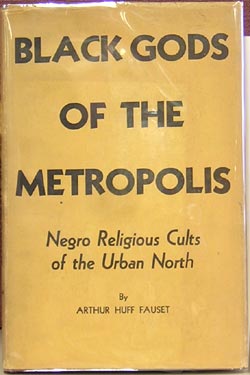
April 13/April 15: Revisit Black Gods of the Metropolis: African American Religions and the Great Migration


April 13/April 15
“Revisiting Black Gods of the Metropolis: African American Religions and the Great Migration”
8 a.m.-5 p.m.
Presented by the IU School of Liberal Arts at IUPUI Dept. of Religious Studies
This one will be important. More information TBA

If this event sounds interesting, you should check out the discussion of African American religions in Indianapolis on April 14. There are several events of the religious encounter between Africans and Catholicism in Cuba associated with the influence of Santeria on the work of featured artist María Magdalena Campos-Pons, check them out.

Return to IndyBuzz List of Events for Spring

Return to IndyBuzz Themes for Events in the Spring

Welcome to IndyBuzz

IndyBuzz provides information about Central Indiana's most stimulating and thought provoking events -- discussions and conferences, art exhibitions, films, music performances. It tells you what's happening … explains why you should be part of what’s happening. More than an events calendar, though, IndyBuzz tries to make events more meaningful for participants by suggesting an article or two to read before the event, recommending books or websites that will be sources of further information after the event, and pointing out related events that are worth attending.

Visit IndyBuzz's sister site, http://www.provocate.org/, which provides a context for the clusters of the events discussed in IndyBuzz.

Who is IndyBuzz?

Provocate strengthens the intellectual and civic fabric of Central Indiana by connecting global & local, entertainment & education, culture & policy