March 13: Discuss war crimes with international law expert Golzar Kheiltash and a former child soldier from Congo
When: Tuesday, March 13 registration starts at 7:00; presentation and discussion 7:30 to 8:45 PM
Where: Butler University, Jordan Hall Room 141.
The creation of the International Criminal Court has established a new venue for investigating and prosecuting war crimes, despite a lack of U.S. participation. Will the non-participation of the U.S. weaken the power of the ICC? What challenges are faced by the ICC in punishing war criminals?
As part of the Indiana Council on World Affairs Great Decisions series, we have a very unique chance to hear first hand reports about the current evolution of the International Criminal Court. The ICC is launching its first case, formally charging Thomas Lubanga Dyilo (the onetime leader of the country's Union des Patriotes Congolais) with "war crimes of enlisting and conscripting of children under the age of fifteen years." Although the US has opposed the ICC, fearing that American soldiers or policymakers could be subject to prosecution, it has cooperated in the case against Lubanga.
Explaining the significance of this development will be Indianapolis favorite, Golzar Kheiltash, of Citizens for Global Solutions. Golzar combines a rigorous academic legal background with strong advocacy skills to promote international legal norms and mechanisms that can prevent and punish the most heinous crimes such as genocide. Golzar has researched, analyzed, and advocated for the ICC in a personal and professional capacity for the last seven years, and currently coordinates the Washington Working Group on the ICC (WICC).
As Golzar said recently: "Thomas Lubanga Dyilo is exactly the type of person for whom the ICC was created -- a warlord who has forced children as young as nine to commit murder, rape, and mutilation, often against their own family members." She has been working closely on the case in DC and The Hague.
Tuesday March 13 at Butler University Golzar will be joined by two special visitors to Indianapolis. In a recent visit to the ICC, Golzar met Bukeni Beck, an activist and filmmaker who seeks to revealing the plight of child soldiers and to give these children a second chance. Beck documents the stories of hundreds of child soldiers on film, revealing a stark and systematic cycle of recruitment and conscription, narrated by the children and their families in their own words. His films demonstrate the difficulties of many children who want to reintegrate into their communities after leaving the camps. This is especially true of girl soldiers who have suffered the added brutality of rape and sexual violence at the hands of their commanders.
Bukeni and Golzar will be accompanied by "Madelaine," a fifteen year old former girl soldier from Congo.
What a fantastic opportunity to hear how these terrible issues are being addressed at a global and multilateral level, and at a local level as well.
For more information on AJEDI Ka/Projet Enfants Soldats, please visit: www.ajedika.org. For more information about Citizens for Global Solutions, please visit: www.globalsolutions.org.
For more information about the visit of Golzar and friends, contact Rich Stazinski at rstazinski@globalsolutions.org; and for information about the ICWA Great Decisions program, contact Bob Reardon at jrreardon@ccrtc.com.
If this sounds like an interesting event, make sure you check out Golzar, Bukeni, and "Madelaine" on March 14 when Bukeni shows and discusses some of his films about child soldiers and their rehabilitation.
The cost for a couple to attend this talk is $5.
Showing posts with label Great Decisions. Show all posts
Showing posts with label Great Decisions. Show all posts


April 4: Listen to one of the country's major experts on global climate change

Christopher Flavin President of Worldwatch Institute, discusses global climate change.
When: Wednesday April 4 -- talk 11-12, lunch 12:00-12:45
Where: North United Methodist Church, N. Meridian St. at 38th St.
How much are human practices contributing to sub-stantial and irreversible changes to the environment? What effect are changes to the climate having in different areas of the planet? What response can the inter-national community adopt to lessen the impact of dramatic climate change?
As President of Worldwatch, Christopher Flavin is the Institute’s chief executive officer, serves on its Board of Directors, and represents the organization before a wide range of international audiences. In his long career at Worldwatch, he has helped guide the Institute’s development, serving as vice president for research and later as senior vice president. He was appointed president in September 2000.Christopher is actively engaged in international climate change and energy policy discussions, and participated in the Earth Summit in Rio de Janeiro in 1992, the Climate Change Conference in Kyoto Japan in 1997, and the World Summit on Sustainable Development in Johannesburg in 2002. He is a founding member of the Board of Directors of the Business Council for Sustainable Energy and is a member of the National Academy of Sciences Board on Energy and Environmental Systems, the Climate Institute, and the Environmental and Energy Study Institute.
It's part of the Mid-North Shepherd Center's Great decisions series. Questions? Contact 317-924-0959 or mnscenter@aol.com
April 11: Another chance to hear Pierre Atlas on the Middle East

Pierre Atlas, head of Marian College's Franciscan Center for Global Studies, discuses what can be done in the Middle East
When: Wednesday April 11 -- talk 11 AM to noon, lunch noon to 12:30
Where: Where: North United Methodist Church, N. Meridian St. at 38th St.
Although the U.S. will remain engaged in Iraq during the next year, other factors have emerged to challenge stability in the region. Iran’s nuclear program, the outcome of the conflict in Lebanon, and Israeli-Palestinian negotiations will all play a key role. How will these issues shape the Middle East?
No one in Central Indiana explains these issues more clearly and humanely than Prof. Pierre Atlas of Marian College. Don't miss this talk. It's part of the Mid-North Shepherd Center's Great decisions series. Questions? Contact 317-924-0959 or mnscenter@aol.com
April 18: Hear Steve Smith explain why Mexico is in crisis, and why we should care
 Dr. Steve Jones of IUPUI discusses the causes and possible solutions of Mexico's crises
When: Wednesday April 18, -- talk 11-12, lunch 12:00-12:45
Where: North United Methodist Church, N. Meridian St. at 38th St.
The results of Mexico’s presidential election are nearly too close to call, how will this result effect the new Mexican administration’s policies? Can Felipe Calderon successfully reform Mexico’s policies on energy, trade and border security and strengthen relations with the United States?
Dr. Steven Jones, is Coordinator of the Office of Service Learning in the Center for Service and Learning (CSL) at Indiana University-Purdue University at Indianapolis (IUPUI). Prior to joining CSL, he was the Associate Director of the Integrating Service with Academic Studies project at Campus Compact from 2002-2004. Steven received a Ph.D. in political science from the University of Utah in 1995 and was an associate professor of political science at the University of Charleston from 1995-2002 where he also served as the Director of the Robert C. Byrd Institute for Government Studies. He edited the second edition of Campus Compact’s Introduction to Service Learning Toolkit and is a co-author of two other Campus Compact monographs, The Community’s College: Indicators of Engagement at Two-Year Institutions and The Promise of Partnerships: Tapping into the Campus as a Community Asset. His most recent publication, with Jim Perry, Quick Hits for Education Citizens, is part of FACET's Quick Hits Series.
Steve's talk is part of the Mid-North Shepherd Center's Great decisions series. Questions? Contact 317-924-0959 or mnscenter@aol.com
April 25: Susan Erickson discusses why we need to care about migration in a global economy
IUPUI's Susan Erickson explains why we need to care about migrations other than from Mexico to Indianapolis
When: Wednesday April 25, talk from 11 to noon, lunch from noon to 12:30
Where: Where: North United Methodist Church, N. Meridian St. at 38th St.
The movement of people across international borders can be initiated by conflict, economic reasons or the chance to achieve political freedoms. Migration issues have taken center-stage in the U.S. and EU, as citizens increasingly worry about job security and terrorism. What are the advantages and disadvantages for countries that are affected by migration?
Although Susan Erickson specializes in American politics, particularly in campaign finance and the media's role in politics, she also teaches courses on international relations and Asian politics. She has carried out extensive research in Taiwan, Hong Kong, Hungary, and Poland. Ms Erickson frequently appears as a political commentator on television, and is a great favorite of the Mid-North Shepherd Center's Great decisions series. Questions? Contact 317-924-0959 or mnscenter@aol.com.
When: Wednesday April 25, talk from 11 to noon, lunch from noon to 12:30
Where: Where: North United Methodist Church, N. Meridian St. at 38th St.
The movement of people across international borders can be initiated by conflict, economic reasons or the chance to achieve political freedoms. Migration issues have taken center-stage in the U.S. and EU, as citizens increasingly worry about job security and terrorism. What are the advantages and disadvantages for countries that are affected by migration?
Although Susan Erickson specializes in American politics, particularly in campaign finance and the media's role in politics, she also teaches courses on international relations and Asian politics. She has carried out extensive research in Taiwan, Hong Kong, Hungary, and Poland. Ms Erickson frequently appears as a political commentator on television, and is a great favorite of the Mid-North Shepherd Center's Great decisions series. Questions? Contact 317-924-0959 or mnscenter@aol.com.
May 2: Finally take the chance to explore South Africa with Kelly Campbell
 Kelly Campbell, Vice President of Operations of Ambassadors for Children, discusses what is happening in South Africa, and how each of us can make a difference
When: Wednesday Ma2, talk 11-noon, lunch noon-12:30
Where: North United Methodist Church, N. Meridian St. at 38th St.
South Africa is the most developed country in Africa and has been an active leader on the continent, yet it still struggles with major issues in the post-Apartheid era. What are the political challenges facing South Africa? What impact is the AIDS epidemic playing on South Africa’s economy and society?
Kelly Campbell is Vice President of Operations for Ambassadors for Children. Ambassadors for Children (AFC) is a not-for-p
 rofit organization dedicated to serving children around the world through short-term humanitarian service trips and sustainable programs. Voluntourism trips are fast becoming the new way to travel. Voluntourism is the combination of voluntary service to a destination with the traditional elements of travel and tourism - arts, culture, history, geography, and recreation. Kelly has been with the organization since 2004 and have served as an intern, volunteer travel coordinator, and Director of Missions. She recently completed her Masters in International Relations at the University of Indianapolis. She was called out of the country unexpectedly and missed her talk to the Indiana Council on World Affairs ... don't miss this chance to hear her what she has to say.
Kelly's talk is part of the Mid-North Shepherd Center's Great decisions series. Questions? Contact 317-924-0959 or mnscenter@aol.com
May 23: Help the World’s Endangered Children

When: Wednesday May 23 -- talk 11-12, lunch 12:00-12:45
Where: North United Methodist Church, N. Meridian St. at 38th St. Indianapolis
Dr. Chuck Dietzen
President and Founder
Timmy Foundation
Ensuring the safety and proper development of children is the stated goal of the global community, yet in some countries, children are exposed to unsafe labor practices, human trafficking, and participation in combat. What role do private donors, governments and international organizations play in ensuring health care, education and safety for the world’s children?
President and Founder
Timmy Foundation
Ensuring the safety and proper development of children is the stated goal of the global community, yet in some countries, children are exposed to unsafe labor practices, human trafficking, and participation in combat. What role do private donors, governments and international organizations play in ensuring health care, education and safety for the world’s children?
The Timmy Foundation began in 1997 as a deep personal commitment of Dr. Charles Dietzen (better known as Dr. Chuck) to assist the medically underserved children he met while conducting medical missions in Haiti and India. Named after his brother, Timmy, the Foundation’s work is dedicated to channelling resources to sustainable health projects in developing countries. The foundation is currently partnering with dynamic projects in nine countries, with the vision of a world in which quality healthcare and education are available to all children.
It's part of the Mid-North Shepherd Center's Great decisions series. Questions? Contact 317-924-0959 or mnscenter@aol.com
January 24: Hear Pierre Atlas explain the causes of the many Middle East crises

Prof. Pierre Atlas of Marian College kicks off the Church of the Saviour's Great Decisions series with a discussion of the Middle East
When: Wednesday, January 24 7:00 PM
Where: Church of the Saviour, 6205 Rucker Road Indianapolis
Although the U.S. will remain closely engaged in Iraq during the next year, other factors have emerged to challenge stability in the region. Iran's nuclear program, the outcome of the conflict in Lebanon, and Israeli-Palestinian negotiations will all play a key role. How will these issues shape the Middle East?
A deceptively simple question, and no one is better at clarifying the issues' complexity and ambiguity than Pierre Atlas of Marian College. Want a taste of the Pierre Atlas experience? Check out this GeoPol video. Pierre is a professor of political science at Marian College, columnist for the Indianapolis Star, pundit for Real Clear Politics, founder and director of the Franciscan Center for Global Studies, associate fellow with the Sagamore Institute, etc. Sponsored by the Bob Calhoun Memorial Great Decisions Series.
If this event sounds interesting, you should check out the ICWA's Great Decisions discussion of the Middle East on February 13 with Prof. Nafhat Nasr, who is sure to present a very different perspective on the region. For an important contrast, John Clark will give a couple of Great Decisions talks about Central Asia on March 7 and March 20. Definitely see the film "Iraq in Fragments" February 23 to March 1.
Return to IndyBuzz List of Events for Spring
Return to IndyBuzz Themes for Events in the Spring
January 31: Find out what is causing global climate change, and what can be done
Electrical engineer Dick Davis discusses "Global Climate Change" as part of the Church of the Saviour's "Great Decisions" series
When: Wednesday January 31, 7:00 PM
Where: Church of the Saviour, 6205 Rucker Road Indianapolis


When: Wednesday January 31, 7:00 PM
Where: Church of the Saviour, 6205 Rucker Road Indianapolis
How much are human practices contributing to substantial and irreversible changes to the environment? What effect are changes to the climate having in different areas of the planet? What response can the international community adopt to lessen the impact of dramatic climate change?


If this event sounds interesting, you should check out All Gore when he comes to town in April, or just get a copy of "Inconvenient Truth." Even better will be to join in other discussions of climate change and the environment. As part of the ICWA's Great Decisions series, you can hear IUPUI climatologist Gabriel Filippelli February 6. Stanford scientist Stephen Schneider discusses "Can we measure, let alone solve, global warming" April 18.
Return to IndyBuzz List of Events for Spring
Return to IndyBuzz Themes for Events in the Spring
February 6: Discuss the science and politics of global climate change
Prof. Gabriel Filippelli--Chair Department of Earth Sciences at IUPUI and Associate Director of Center For Environmental Health at Indiana University -- discusses global climate change for the Great Decisions Series of the Indiana Council on World Affairs.
When: Tuesday, March 29 7:00-9:00 PM
Where: Butler University, Pharmacy Building
How much are human practices contributing to substantial and irreversible changes to the environment? What effect are changes to the climate having in different areas of the planet? What response can the international community adopt to lessen the impact of dramatic climate change?
These and other questions will be addressed by Prof. Gabriel Filippelli of IUPUI. Part of the reason why the public and policymakers seem confused about the topic of "global warming" (perhaps more precise would be to call the topic "massive human induced climate change") is that the science is hard. It isn't just that the math underlying the models is beyond our brains, there is also a matter of understanding the nature of the scientific method and the role of doubt.
Filippelli should be a valuable guide, a real live honest to goodness climate scientist who works hard to clarify issues for ordinary citizens. Here's how he describes his research agenda. Filippelli was featured in a WISH-TV feature about global climate change.
“When greenhouse gases like carbon dioxide and methane go up in our
atmosphere, because of physics, the atmosphere and the planet simply have to warm,” said Dr. Gabriel Filippelli, IUPUI. Proponents say they have proof. “We can prove this by doing this in a lab experiment in a beaker. You add more of these gases in, the beaker is going to be hotter with the same amount of incident light,” said Filippelli.
The only way to predict future climate is through computer models. “Weather models have a hard time forecasting weather conditions past a week or 10 days,” said Randy Ollis, Forecast 8 meteorologist. Researchers say climate models are
different. “The science behind understanding climate change is much more solid than it was even 10 years ago,” said Filippelli. “Climate models are extremely stripped down and they just deal with some basic aspects of atmospheric physics,” said Dr. Gabriel Filippelli, IUPUI. They’re basic in form, but complex in results. The models don't agree on future climate, but global warming proponents say, “Everyone that I have seen applied projects a warming,” said Filippelli. With that, Filippelli is comfortable enough to say, “If you are looking to buy real estate, Antarctica is I think a good deal right now.”


Prof. Filippelli will surely help connect this global issue to local concerns. We get a taste of this in a news article from last year.
If this event sounds interesting, you should check out the Church of the Saviour's Great Decision discussion of global climate change January 31. And hear a Stanford scientist ask whether we can even measure global climate change on April 18. That makes science sem pretty fuzzy ... so let's listen to the leading authority on the fuzziest of warped and bizarre science on March 7.
Return to IndyBuzz List of Events for Spring
Return to IndyBuzz Themes for Events in the Spring
February 7: Figure out what is happening in Mexico and why we should care
Craig Auchter discusses Mexico as part of the Church of the Saviour Great Decisions series
When: Wednesday, February 7 7:00 PM
Where: Church of the Saviour, 6205 Rucker Road Indianapolis
 The results of Mexico's presidential election were nearly too close to call: how will this result affect the new Mexican administration's policies? Can Felipe Calderón successfully reform Mexico's policies on energy, trade and border security and strengthen relations with the United States? Prof. Craig Auchter is the chair of the department of political science at Butler University, and is one of the area's leading experts on democracy and social change in Latin America. Sponsored by the Bob Calhoun Memorial Great Decisions Series.
If this event sounds interesting, you should check out the ICWA's Great Decisions discussion of Mexico on February 20. And visit the exhibit of art inspired by conflicts in Oaxaca at Big Car through the end of January.
Return to IndyBuzz List of Events for Spring
Return to IndyBuzz Themes for Events in the Spring
When: Wednesday, February 7 7:00 PM
Where: Church of the Saviour, 6205 Rucker Road Indianapolis
 The results of Mexico's presidential election were nearly too close to call: how will this result affect the new Mexican administration's policies? Can Felipe Calderón successfully reform Mexico's policies on energy, trade and border security and strengthen relations with the United States? Prof. Craig Auchter is the chair of the department of political science at Butler University, and is one of the area's leading experts on democracy and social change in Latin America. Sponsored by the Bob Calhoun Memorial Great Decisions Series.
If this event sounds interesting, you should check out the ICWA's Great Decisions discussion of Mexico on February 20. And visit the exhibit of art inspired by conflicts in Oaxaca at Big Car through the end of January.
Return to IndyBuzz List of Events for Spring
Return to IndyBuzz Themes for Events in the Spring
February 13: Learn about Lebanon and the rest of the Middle East from Prof. Nafhat Nasr

DePauw Emeritus Prof. Nafhat Nasr leads a discussion of the Middle East as part of the Indiana Council on World Affairs Great Decisions Series
When: Tuesday, March 29 7:00-9:00 PM
Where: Butler University, Pharmacy Building
Prof. Nafhat Nasr, one of the most distinguished political science professors ever to have served at DePauw University, addresses the ICWA. A native of Lebanon, he specializes in the sources and possible causes of international conflicts.
If this event sounds interesting, you should check out Pierre Atlas's Great Decisions on the Middle East talk January 24. John Clark will talk about a less well-known reigion with similar problems -- Central Asia -- March 7 and March 20. Hear a libertarian-leaning perspective on the region January 17. And see a couple of excellent films that illuminate the region's crises: "Iraq in Fragments" February 23 to March 1, and Battle of Algiers March 22.
Return to IndyBuzz List of Events for Spring
Return to IndyBuzz Themes for Events in the Spring
Return to IndyBuzz List of Events for Spring
Return to IndyBuzz Themes for Events in the Spring
February 14: Join Susan Erickson for a discussion of International Migrations
Susan Erickson on International Migrations for the Church of the Saviour Great Decisions series
When: Wednesday, February 14 7:00 PM
Where: Church of the Saviour, 6205 Rucker Road Indianapolis
The movement of people across international borders can be initiated by conflict, economic reasons or the chance to achieve political freedoms. Migration issues have taken center-stage in the U.S. and EU, as citizens increasingly worry about job security and terrorism. What are the advantages and disadvantages for countries that are affected by migration?
Although Susan Erickson specializes in American politics, particularly in campaign finance and the media's role in politics, she also teaches courses on international relations and Asian politics. She has carried out extensive research in Taiwan, Hong Kong, Hungary, and Poland. Ms Erickson frequently appears as a political commentator on television, and is a great favorite of the Bob Calhoun Memorial Great Decisions Series.
When: Wednesday, February 14 7:00 PM
Where: Church of the Saviour, 6205 Rucker Road Indianapolis
The movement of people across international borders can be initiated by conflict, economic reasons or the chance to achieve political freedoms. Migration issues have taken center-stage in the U.S. and EU, as citizens increasingly worry about job security and terrorism. What are the advantages and disadvantages for countries that are affected by migration?
Although Susan Erickson specializes in American politics, particularly in campaign finance and the media's role in politics, she also teaches courses on international relations and Asian politics. She has carried out extensive research in Taiwan, Hong Kong, Hungary, and Poland. Ms Erickson frequently appears as a political commentator on television, and is a great favorite of the Bob Calhoun Memorial Great Decisions Series.
If this event sounds interesting, you should check out the ICWA's Great decisions discussion of global migration on February 27. The Great Decisions discussions of Mexico February 7 and February 20 will be useful, as will be a contrasting perspective of Africans in France on January 19.
Return to IndyBuzz List of Events for Spring
Return to IndyBuzz Themes for Events in the Spring
Return to IndyBuzz List of Events for Spring
Return to IndyBuzz Themes for Events in the Spring
February 20: Talk about what should be done to help our troubled (and sometimes troubling) neighbor Mexico
Steve Jones of IUPUI leads a discussion of Mexico for the Indiana Council on World Affairs Great Decisions SeriesWhen: Tuesday February 20 7:00-9:00 PM
Where: Butler University, Pharmacy Building
Dr. Steven Jones, is Coordinator of the Office of Service Learning in the Center for Service and Learning (CSL) at Indiana University-Purdue University at Indianapolis (IUPUI). Prior to joining CSL, he was the Associate Director of the Integrating Service with Academic Studies project at Campus Compact from 2002-2004. Steven received a Ph.D. in political science from the University of Utah in 1995 and was an associate professor of political science at the University of Charleston from 1995-2002 where he also served as the Director of the Robert C. Byrd Institute for Government Studies. He edited the second edition of Campus Compact’s Introduction to Service Learning Toolkit and is a co-author of two other Campus Compact monographs, The Community’s College: Indicators of Engagement at Two-Year Institutions and The Promise of Partnerships: Tapping into the Campus as a Community Asset. His most recent publication, with Jim Perry, Quick Hits for Education Citizens, is part of FACET's Quick Hits Series.
If this event sounds interesting, you should check out the Great Decisions discussion of Mexico led by Craig Auchter February 7. Drive to Big Car for art inspired by social conflicts in Oaxaca. Hear about what the Catholic Church is doing in Latin America on February 13. And make sure you hear the Great Decisions discussions of global migration on February 14 and February 27.
Return to IndyBuzz List of Events for Spring
Return to IndyBuzz Themes for Events in the Spring
February 21: Hear Terri Jett's impressions of South Africa (and perhaps learn more about race in America)
 Butler University's Terri Jett talks about South Africa
When: Wednesday, March 23 7:00 PM
Where: Church of the Saviour, 6205 Rucker Road Indianapolis
South Africa is the most developed country in Africa and has been an active leader on the continent, yet is still struggles with major issues in the post-Apartheid era. What are the political challenges facing South Africa? What impact is the AIDS epidemic playing on South Africa's economy and society?
Terri Jett is an associate professor of political science at Butler University. Dr. Jett has researched the political, economic, social and religious landscape of rural black communities in the American south and has a keen interest in the religious connection to the U.S. civil rights movement. Terri leads Butler University's Center for Faith and Vocation's Field Ministry seminars to South Africa. The goal of the Field Seminar in Ministry is to give undergraduate students who are considering a call to ministry or other community service the chance to reflect on religion and society in a new setting. The seminar will examine how religious communities and service organizations deal with issues of faith and calling in South Africa. Sponsored by the Bob Calhoun Memorial Great Decisions Series
To read an essay about Hoosiers and Africa, "Who Can Help Africans Solve Their Problems?" that connects many of the events relating to Africa this spring, go to Views-PRI, the sister site of IndyBuzz (and forerunner of the electronic magazine Provocate).
February 27: Ask yourself how we will be changed by global migration
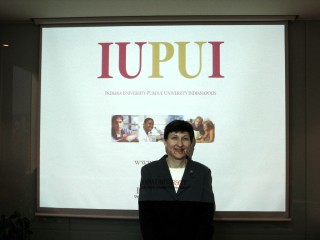 Sara Allaei, Assistant Dean of International Services at IUPUI discusses international migration
When: Tuesday February 27 7:00-9:00 PM
Where: Butler University, Pharmacy Building
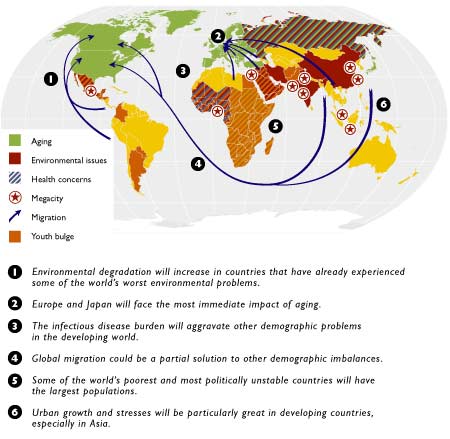
The movement of people across international borders can be initiated by conflict, economic reasons or the chance to achieve political freedoms. Migration issues have taken center-stage in the U.S. and EU, as citizens increasingly worry about job security and terrorism. What are the advantages and disadvantages for countries that are affected by migration?
Nearly 200 million migrants in the world today, if they lived together in a country it would be about the fourth biggest in the world ... and the numbers are increasing rapidly.

If this event sounds interesting, you should check out Susan Erickson's discussion of global migration February 14. Attend the dicussions of Mexico on February 7 and February 20, but balance that with a discussion of how migration is reshaping France on January 19.
Return to IndyBuzz List of Events for Spring
Return to IndyBuzz Themes for Events in the Spring
Return to IndyBuzz List of Events for Spring
Return to IndyBuzz Themes for Events in the Spring
February 28: Join Sheila Kennedy in discussing bringing war crimes before the International Criminal Court

Local legend Sheila Kennedy addresses the possibilities and constraints of international law for dealing with war crimes
When: Wednesday, February 28 7:00 PM
Where: Church of the Saviour, 6205 Rucker Road Indianapolis
The creation of the International Criminal Court has established a new venue for investigating and prosecuting war crimes, despite a lack of U.S. participation. Will the non-participation of the U.S. weaken the power of the ICC? What challenges are faced by the ICC in punishing war criminals?
Sheila is Professor at the School of Public and Environmental Affairs (SPEA) at Indiana University Purdue University Indianapolis, teaching Law
 and Public Policy, a member of IUPUI’s Philanthropic Studies faculty, a Faculty Fellow with both the Center for Religion and American Culture in the School of Liberal Arts and the Tobias Center of the Kelley School of Business, an adjunct professor of political science, a founder of the American Values Alliance, former director of the Indiana Civil Liberties Union, author of many books and articles on too many topics to count. Sheila loves the law and despises bullies, which probably tells you where she plunks down on this issue. If you need confirmation, check out her article on "Terrorism and the Constitution." This should be a lively evening. Sponsored by the Bob Calhoun Memorial Great Decisions Series.
 If this event sounds interesting, you should check out Raj Purohit's talk about the topic on March 13. For a diametrically opposed view, hear the architect of the Bush Administration's legal strategy for fighting terror, John Yoo, on March 2 at the Economic Club and Sagamore Institute.
Return to IndyBuzz List of Events for Spring
Return to IndyBuzz Themes for Events in the Spring
Return to IndyBuzz List of Events for Spring
Return to IndyBuzz Themes for Events in the Spring
March 6: Explore South Africa with Kelly Campbell of Ambassadors for Children

 Kelly Campbell, VP of Ambassadors for Children, leads a discussion of South African problems and how we can be part of solutions for the Indiana Council on World Affairs Great Decisions Series
When: Tuesday, March 6 7:00-9:00 PM
Where: Butler University, Pharmacy Building
South Africa is the most developed country in Africa and has been an active leader on the continent, yet is still struggles with major issues in the post-Apartheid era. What are the political challenges facing South Africa? What impact is the AIDS epidemic playing on South Africa's economy and society?
Kelly Campbell is Vice President of Operations for Ambassadors for Children. Ambassadors for Children (AFC) is a not-for-profit organization dedicated to serving children around the world through short-term humanitarian service trips and sustainable programs. Voluntourism trips are fast becoming the new way to travel.
 Voluntourism is the combination of voluntary service to a destination with the traditional elements of travel and tourism - arts, culture, history, geography, and recreation. Kelly has been with the organization since 2004 and have served as an intern, volunteer travel coordinator, and Director of Missions. She recently completed her Masters in International Relations at the University of Indianapolis.
If this event sounds interesting, you should check out the discussion of Hoosiers helping Africa January 26 ... Kelly and Ambassadors for Children are important components of that helping. Terri Jett will give a different perspective on South Africa February 21.
Return to IndyBuzz List of Events for Spring
Return to IndyBuzz Themes for Events in the Spring
To read an essay about Hoosiers and Africa, "Who Can Help Africans Solve Their Problems?" that connects many of the events relating to Africa this spring, go to Views-PRI, the sister site of IndyBuzz (and forerunner of the electronic magazine Provocate).
March 7: Learn the rules for the Great Game in Central Asia for the 21st Century
 John Clark relives his days as a Central Asian expert ... with a special guest who is a real expert
When: Wednesday, March 7 7:00 PM
Where: Church of the Saviour, 6205 Rucker Road Indianapolis
Rich in energy supplies and strategically located, the five countries of Central Asia attract attention from the Middle East, China, Russia and the United States. How will international competition for energy supplies affect each country? What are U.S. interests in the region?

Joining Clark will be Nodra Isamiddinova, an IUPUI student from Uzbekistan, who will report on her recent trip to her autocratic home country.
Sponsored by the Bob Calhoun Memorial Great Decisions Series
If this event sounds interesting, you should check out Clark's discussion of Central Asia for the Indiana Council on World Affairs March 20. On March 7 I will focus on the internal situation of Central Asia's economies, societies, and governments. I'll be eager to hear about Nodra's impressions of changes in Uzbekistan. On March 20 I will emphasize the geostrategic interests of the US in the region. A good contrast will be Pierre Atlas's discussion of the Middle East January 24.
Return to IndyBuzz List of Events for Spring
Return to IndyBuzz Themes for Events in the Spring
Return to IndyBuzz List of Events for Spring
Return to IndyBuzz Themes for Events in the Spring
March 13: Ask expert Raj Purohit whether War Crimes belong in the International Criminal Court

Raj Puhorit, senior fellow with Citizens for Global Solutions, talks about the International Criminal Court for the Indiana Council on World Affairs Great Decisions Series
When: Tuesday, March 13 7:00-9:00 PM
Where: Butler University, Pharmacy Building
The creation of the International Criminal Court has established a new venue for investigating and prosecuting war crimes, despite a lack of U.S. participation. Will the non-participation of the U.S. weaken the power of the ICC? What challenges are faced by the ICC in punishing war criminals?
Providing answers to these tough questions will be Raj Puhorit, senior fellow with Citizens for Global Solutions. Citizens for Global Solutions is a nationwide organization that inspires America to engage the world, advocating closer American cooperation with and support for international institutions capable of responding to the threats and challenges of a new century. Despite this mission, Raj is very clear-eyed about the limitations of organizations such as the International Criminal Court.
Raj started at Citizens for Global Solutions as a Senior Fellow in Summer 2005. Most recently, Raj was Legislative Director for Human Rights First, where he was responsible for leading the organization's advocacy efforts at the Congressional and Executive levels, with a focus on international relations, judiciary and labor issues. Raj helped develop and implement new legislative initiatives and lobbying strategies. He also represented Human Rights First in a range of coalitions, including the Washington Working Group on the International Criminal Court, and was a media spokesperson. Before joining Human Rights First, Raj served as Legislative Director for the National Association of Criminal Defense Lawyers. He has also served as Director of Legal Services at the Center on Conscience and War. Raj received his Bachelor of Laws (LL.B) from Sussex University (1995) and his LL.M. in International Legal Studies from American University, Washington College of Law (1997), where he also teaches.
If this event sounds interesting, you should check out Sheila Kennedy's talk about the ICC and war crimes on February 28, and the very opposed view of John Yoo on March 2.
Return to IndyBuzz List of Events for Spring
Return to IndyBuzz Themes for Events in the Spring
Return to IndyBuzz List of Events for Spring
Return to IndyBuzz Themes for Events in the Spring
Subscribe to:
Posts (Atom)