Sept. 15: An evening with Paul Volcker


Lecture by Paul Volcker, Chairman of the Independent Inquiry Committee into the U.N. Oil for Food Program, former Chairman of the Board of Governors of the Federal Reserve

When: Thursday 15 September, 8:00-9:30 PM

Where: DePauw University Performing Arts Center, Moore Theatre

Paul Volcker's widely anticipated report about the abuses of the UN's "oil-for-food" program for Iraq (1991-2003) has been released. Critics of the UN (many of them Americans who support the invasion of Iraq and feel the UN was an obstacle to deposing Saddam) can quote plenty of lurid examples of corruption and malfeasance from the report. The report does say that the program worked to ease the suffering of Iraqi people; and as James Traub wrote in the New Republic in February, the program was designed for political reasons, to maintain support on the UN Security Council for the sanctions on Saddam, and in that sense the program worked relatively well. The criticisms of UN secretary general Kofi Annan in the report are for his acts of omission rather than comission, for his poor oversight rather than his personal corruption. (Annan's son benefited from the program, but not apparently because of any strings his father pulled ... ask members of the Bush family about how possessing a powerful dad seems to open doors as if by magic.) The Economist calls it "a fair-minded report at a crucial time": a round of negotiations over UN reform starts next week, and this report certainly highlights the urgency of making major changes. It's interesting that the report that criticizes his management of the UN thus strengthens the hand of Kofi Annan, the most vocal proponent of meaningful reform ever to head the UN.

For more information about the oil-for-food program, go here. For a copy of the report, go here. Want a chance to hear Paul Volcker talk about "Ethics and Leadership"? Go to DePauw on September 15 at 8:00 PM.

Sept. 16: Dance with a Nun: Break the Silence, Break the Chains of Tradition for the Women of Africa


A day of fun and cross-cultural education about Africa

When: Friday 16 September, 4:30-9:00 PM

Where: St. Philips Church, 720 Dr. Martin Luther King Jr. Street, Indianapolis, IN 46202

One of the best events I organized at Hudson institute was for Sister Sabina Stella Santana, a Ugandan nun who had established a nongovernmental organization in Uganda called “Break the Silence, Break the Chains of Tradition for the Women of Africa, Inc. (BSBCTWA)” Sister’s Sabina’s story was a good one, her cause a noble one, but the best part of the event was when she taught to crowd of 60+ Hoosiers (many of whom were themselves 60+) how Ugandans dance. A lot more booty-shaking than one expects from a nun, especially a nun giving a talk in a right-wing think tank.

You have a chance to experience the delight that is Sister Sabina. St. Philip’s Church will host a book signing and fundraiser for BSBCTWA. Sister Sabina will share her books, Break the Silence; Break the Chains; and Ten Happy Ending Children's Stories Vol. 1. Other works by local authors and artists will also be available, including those of Nina McCoy of Indianapolis. (Proceeds from Sr. Stella's books will go towards the completion of the Women's Adult Education Center in Uganda.) In addition to the book signing will be cultural events including Food, Belly Dancers led by Judy Drums by Indianapolis Urban Vibes, Music and dance by Wabash University, Poetry by Afri-Shake children, Gospel Music by four Gospel Choirs, and more. Volunteers are very welcome .

Break the Silence, Break the Chains of Tradition for the Women of Africa is a non-profit organization based in Indianapolis to assist the women of Africa in their fight against oppressive traditions. BSBCTWA initiates educational programs to help women change their lives and live as full human beings for the greater glory of the Creator. BSBCTWA wants to bring about change in African traditions such as ending the circumcision of women, the sexual and physical abuse of women, enabling women to inherit, women maltreated in the employment setting, the trafficking of women, and improve women’s educational opportunities. Questions? Contact Sister Sabina S. Santana: P.O.BOX 441724 Indianapolis, IN 46244; Tel: 317 489 3013; bsbcatwainc@yahoo.com

Sept. 20: “Gaining Access to Global Markets: An Indiana Case Study”

World Trade Club Lecture by Tom Mathews, Export manager of Weaver Popcorn

When: Tuesday 20 September, 11:30 AM-1:15 PM Registration and social time from 11:30am to Noon.

Where: Omni Severin Hotel Downtown Jennings Ballroom 40 W. Jackson Pl. Indianapolis

Weaver Popcorn, an Indiana Company founded in 1928, is a genuine player in the global economy: it supplies nearly 30% of the popcorn sold in the world. Tom Mathews focuses on international sales in Asian markets. He will focus on Weaver Popcorn’s history, and on case analyses of markets such as Russia, East Europe, and Asian countries.


Event Cost:
  • $30 for members
  • $40 for non-members
  • $25 for full-time students

To make a reservation:

Sept. 21: "Hooking Up: Sex, Alcohol and the Death of Romance on College Campuses"


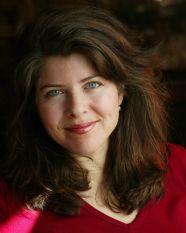
Lecture by award-winning author and media personality Naomi Wolf

When: Wednesday 21 September, 7:30-9:00 PM

Where: Kresge Auditorium of DePauw’s Performing Arts Center

Naomi Wolf is accredited for launching a new feminist movement in the late 20th Century with her claim that the fashion industry’s images of beauty are used against women. Beauty Myth "presents a provocative and persuasive account of the pervasiveness of the beauty ideal in all facets of Western culture, including work, sex, and religion," noted Library Journal. Wolf is also co-founder of The Woodhull Institute for Ethical Leadership, an organization that teaches young women how to become leaders and agents of change in the 21st century. Woodhull has graduated ov er 800 students. As Newsweek recently reported, 78% of college students say they have "hooked up," usually after consuming alcohol. According to Wolf, young women feel pressured to live up to the unrealistic sexual standards of the pornographic industry, but also fear being called 'sluts' if they are too sexually assertive. Young men feel the pressure to 'score' and have casual conquests without getting emotionally involved. The result? Hooking up. Rather than simply condemning this practice, Wolf's lecture explores why it is a symptom of something deeper: the reality that students are pressured with millions of sexual images but lacking a real set of values surrounding sexuality. In her lecture, Wolf forges, with the students' participation, a realistic set of sexual ethics that will help them address real-life situations and take responsibility for their own value-based decisions.

Sept. 21: Sagamore Institute Conversation on Philanthropy

Talk by Richard Gunderman and panel discussion of the implications of his ideas for liberal philanthropy.

When: Wednesday 21 September, 10-11:30 AM

Where: Sagamore Institute, 340 W. Michigan St. Indianapolis

SIPR will host its second Conversations on Philanthropy Roundtable on September 21. It will feature the thought-provoking essay "Giving and Human Excellence,” by Richard Gunderman (IUPUI Assistant Professor, Department of Philosophy; Vice Chairman, Radiology; Director, Pediatric Radiology). As before, the program will be moderated by Associate Fellow Lenore Ealy, who serves as editor of the Conversations on Philanthropy book series. The program will run from 10:00-11:30am at SIPR’s headquarters in Indianapolis. The cost is $10. To RSVP, contact Director of Marketing and Events Maureen Lee at 317-472-9665 or maureen@sipr.org. To order a copy of the book, click here. Or get it off the web here.

A more detailed description of the program (I will be a discussant of Gunderman's intriguing but [I think] flawed study):

Conversations on Philanthropy
“Giving and Human Excellence”

Featuring

Richard B. Gunderman, M.D., Ph.D.
Associate Professor of Radiology, Pediatrics, Medical Education, Philosophy,
Liberal Arts and Philanthropy at Indiana University
Vice Chair of Radiology and Director of Pediatric Radiology

Panelists
John Clark, Whitney Horn, and Milton Thompson

SIPR’s second Conversations on Philanthropy Roundtable continues our ongoing discussion on the role of philanthropy in a free society, using Dr. Richard Gunderman’s “Giving and Human Excellence: The Paradigm of Liberal Philanthropy” as a starting point. Dr. Gunderman’s essay appears in Conversations on Philanthropy: New Paradigms (DonorsTrust, 2005), which was edited by Dr. Lenore T. Ealy, an Associate Fellow at SIPR. Dr. Gunderman’s paper explores the traditional frameworks for giving, including “charitable philanthropy” and “scientific philanthropy,” and explains why these traditions should give way to a new paradigm of “liberal philanthropy.” Dr. Gunderman proposes that the goal of “liberal philanthropy” should be to “transform receivers into givers.” In his view, only by liberating the human aspiration to be generous can philanthropy truly elevate people out of the shame of unfortunate conditions and restore them to their essential dignity as human beings capable of attaining the excellence of liberality. Dr. Gunderman will be joined by Dr. Ealy and other panelists from SIPR. Conversations on Philanthropy is a semi-annual occasional series published by The Project for New Philanthropy Studies at DonorsTrust, which also serves as co-sponsor of the Roundtable series. Complimentary copies of the book will be available to all who attend this event.

10:00 a.m. - 11:30 a.m. Wednesday, September 21, 2005
Sagamore Institute for Policy Research
Third Floor Conference Room
340 West Michigan Street
Indianapolis, Indiana 46202

Please RSVP to Maureen Lee at maureen@sipr.org, by Friday, September 16, 2005 (acceptances only). There will be a $10 charge for this event.
This program is complimentary for members of the SIPR Founders’ Club.


SIPR’s Policy Roundtables seek to inform civic, community, business, and government leaders about innovative ideas and the people behind them—in Indiana, across the country, and around the world.

Sept. 22: Iran: Its Future Relations with the US and with the World

Talk by Afshin Molavi, the author of the critically acclaimed book Persian Pilgrimages: Journeys Across Iran, which was nominated for the Thomas Cook literary travel book of the year award

When: Thursday 22 September, Reception at 5:45 dinner at 6:30, speaker presentation shortly after 7:30 and ends at 9:00.

Where: Woodstock Club 1301 W 38th St, Indianapolis, 46208

Afshin Molavi is currently a fellow at the New America Foundation, a non-partisan, Washington-based think tank devoted to pragmatic solutions to global problems. At New America, Molavi writes on U.S foreign policy, globalization, global economic development, and Middle East affairs. He also advocates for economic dignity as a basic human right and the strengthening of global middle classes –two themes he is exploring for his next book on economic development in the Middle East.

A recipient of a Woodrow Wilson International Center for Scholars Public Policy Fellowship and the Joe Alex Morris Jr. National Council on US-Arab Relations/Los Angeles Times Journalism Fellowship, Afshin Molavi holds an MA in Middle East history and International Economics from the Johns Hopkins University Paul H. Nitze School of Advanced International Studies.
Born in Iran, but raised and educated in the West, Molavi has written widely on the Middle East, the Muslim world and the United States – and the links between the three -- as a journalist and scholar for more than ten years, with postings in Riyadh, Dubai, Jeddah, Washington and Tehran, and assignments across the region. He has covered Iran and the Persian Gulf region for Reuters and the Washington Post, and written widely about the United States for the Arab News of Saudi Arabia and Asharq Al-Awsat, a leading pan-Arabic daily.

Sponsored by the Indianapolis Committee on Foreign Relations. Cost for ICFR members is $37. For more information and to RSVP contact Courtenay Weldon: (317) 293-5227 and courttenayweldon@ameritech.net

Sept. 24: A performance of Chinese folk music


Visit to Indianapolis of Chinese group Qing Mei Jing Yue, one of the world’s great quartets playing in any genre

When: Saturday 24 September, 8:00 PM

Where: Butler University, Clowes Hall, 4602 Sunset Ave. Indianapolis

The group’s Qing Mei Jing Yue name comes from the four artists’ first names, sort of like if the group from Liverpool had called themselves “John Paul George Ringo.” Actually, the comparison with the Beatles is not heresy, this group is at the top of their genre. Their pipa player Yang Jing is considered one of the best in China’s very long history. Some examples of their haunting music:

Listen to Qing Mei Jing Yue – Water Silhouette
Listen to Qing Mei Jing Yue – The King of Xi Chu Dynasty
Listen to Qing Mei Jing Yue – Moon over the West River

Sponsored by the Ministry of Culture People’s Republic of China, Lilly Chinese Culture Network, Indianapolis Chinese Community Center Inc. and Butler University

Sept. 25: Intelligent Design and Evolution: A Discussion of Education, Science, and Faith

A panel discussion following the Indiana Repertory Theatre’s performance of Inherit the Wind

When: Sunday 25 September, play performed at 2:00 PM; panel discussion follows the play

Where: Indiana Repertory Theatre, 140 W Washington St. Indianapolis (parking here)

One of the most heated topics in today’s discussions of religion and science concerns teaching “intelligent design” (ID) in schools instead of or along with teaching evolution. This controversy is important and poorly understood. (For what it is worth, I am the product of an Evangelical education that would have seen “intelligent design” as deviating too much from scripture. My high school biology classes didn’t even use the word “evolution,” and our world history class began in the year 4004 BC when God created the world.) Even President Bush has weighed in with his view that both evolution and ID ought to be taught, and let the students decide what is true.

Some may feel a sense of déjà vu all over again: didn’t we deal with this issue in the “Scopes monkey trial” of 1925? Not really. IRT is performing “Inherit the Wind,” the play on which was based the 1960 Stanley Kramer film starring Gene Kelly and Spencer Tracey. The play was loosely based on the trial in Dayton TN.

Following the September 25 performance of the play, I will moderate a panel featuring several players in the real world drama over this controversy. Alex Oren s director of “The Mighty Cannon,” the local group that is threatening to sue the Hamilton County School District to force it to teach ID; David L. Stocum, Dean Emeritus of the School of Science and Professor of Biology at IUPUI; and Rabbi Sandy Sasso, who has written that science and religion don’t have to conflict.

I plan to post a lot more about these issues before the event, so check IndyBuzz.


For More Information… My most excellent research associate Courtney Burkey turned up some suggested sources for learning more about the controversy about ID:

Indianapolis Star article “Evolution debate may play out in schools” http://www.indystar.com/apps/pbcs.dll/article?AID=/20050817/NEWS02/508170482
A short summary of the challenges that the Indiana education system might be facing. Discusses measures some school corporations have implemented in regards to Intelligent Design and what the arguments are on both sides of the issue.

Indiana Department of Education, Academic Standards – Biology I
http://www.doe.state.in.us/standards/Docs-2004/English/PDF/HS-Science/Biology.pdf
The Tenth Amendment of the U.S. Constitution gives the rights of development educational standards to the individual State and local officials, as such this website provides information on what is constitutionally, both at the State and federal levels, to teach in public schools in regards to science.

The Mighty Cannon http://www.mightycannon.org
Advocate organization for Intelligent Design based in Fishers, Indiana. The agency is hoping to persuade Hamilton Southeastern School Corporation in to teaching Intelligent Design along side of evolution. “It is the desire of The Mighty Cannon (TMC) to stop the influence of atheism and immorality in our public schools. The restoration of America must include our children, otherwise, our successes are only temporary,” – Mighty Cannon.

SciTech Daily: http://www.scitechdaily.com/
This website has links to almost everything published about science. Topics include daily feature stores from around the world, books and media resources, and analysis and opinions. “The idea was to link to the most thought-provoking, well researched online items in the world of science and technology,” – SciTech Daily.

“When Faith and Reason Clash: Evolution and the Bible” by Alvin Plantinga
http://www.asa3.org/ASA/dialogues/Faith-reason/CRS9-91Plantinga1.html
Alvin Plantiga is a professor of Philosophy at Notre Dame University. His writings on Christianity are widely published. In this article provided by the American Scientific Affiliation (ASA), which provides explanations for science through a Christian prospective, Plantiga provides the reader with an understanding of how a Christian can marry his/her beliefs with science.

National Center for Science Education (NCSE) - http://www.ncseweb.org
This organization promotes the teachings of evolution in public education. NCSE provides reviews of current anti-evolution activity in the United States and around the world Background to the fundamentally creationist and anti-evolution movement known as "Intelligent Design" Detailed information on the Creation/Evolution controversy from 1859 to the present Resources for parents, teachers, school boards, and the general public. NCSE is the only national organization specializing in this issue.

Textbook: Of Pandas and People: The Central Question of Biological Origins by Percival Davis and Dean H. Kenyon
“Of Pandas and People gives evidence for intelligent design from origin-of-life studies, biochemistry, genetics, homology, and paleontology. In a unique manner, Of Pandas and People gives the pros and cons of both the biological-evolution theory and the intelligent-design concept,” – Amazon.com. Be sure to read the reader reviews of this textbook.

The Secular Web http://www.infidels.org
The Secular Web is published by the Internet Infidels, an organization of unpaid volunteers dedicated to the growth and maintenance of the most comprehensive freethought website on the Internet. They have full recognition as a 501(c)(3) nonprofit educational organization

Michael Behe: Wikipedia.org http://en.wikipedia.org/wiki/Michael_Behe
Gives a biographical background of Intelligent Design proponent Michael Behe, Ph.D.
Publications:
Behe, M.J. (2005). “Design for Living”. New York Times, February 7, p. A21.
Behe, M.J. (2004). “Irreducible Complexity: Obstacle to Darwinian Evolution.”In Debating Design: from Darwin to DNA, Ruse, M. and Dembski, W.A., eds., Cambridge University Press, pp. 352-370.
Behe, M.J. 2003. “Design in the Details: The Origin of Biomolecular Machines.” In Darwinism, Design & Public Education, Campbell, J.A. and Meyer, S.C. eds., Michigan State University Press, pp. 287-302.
Nova Science Programming on Air & Online: http://www.pbs.org/wgbh/nova/origins/knoll.html
Nova Science, a Public Broadcasting Service (PBS), program, which produce science education shows. Currently, Nova has been running a program series on the origins of the universe, earth, and life itself.

BOOKS

Dembski, William A.. Intelligent Design: the Bridge Between Science and Theology. InterVarsity Press (July, 2002).
Dembski “aims to show the lay reader ‘how detecting design within the universe, and especially against the backdrop of biology and biochemistry, unseats naturalism’--and above all Darwin's expulsion of design in his theory of evolution,” - Amazon.com

Larson, Edward J. Trial and Error: The American Controversy over Creation & Evolution. New York: Oxford University Press. (1989) A comprehensive account of the educational and legal battles erupting from the debate over teaching evolution in America's public schools from 1925 to the 1980s.

Miller, James, ed. An Evolving Dialogue: Theological and Scientific Perspectives on Evolution. Trinity International Press (2001) A good basic introduction to historical and philosophical perspectives on the relationship between evolutionary biology and religious thought.

Numbers, Ronald L. The Creationists. New York: Alfred Knopf. (1992) A detailed history of modern creationism; traces its sources - obscure and famous - through exhaustive interviews and document searches.

Toumey, Christopher. God's Own Scientists. Brunswick, NJ: Rutgers University Press, (1996).
This anthropological investigation of a group of North Carolina creationists discusses the place of creationism in American culture.

Wilson, Jonathan. Uncommon Dissent: Intellectuals Who Find Darwinism Unconvincing. ISI Books (June, 2004).
“If you’ve never heard the term ‘post-Darwinian,’ welcome to the world of thinkers who reject evolutionary theory and its reliance on the notion of chance (i.e. "random mutation"). In this provocative volume, biologists, mathematicians and physicists as well as theologians and other intellectuals—many affiliated with the Discovery Institute, which espouses the concept of intelligent design—argue, as editor Dembski writes, that ‘the preponderance of evidence goes against Darwinism,’” – Publishers Weekly

Wells, Jonathan. Icons of Evolution: Science or Myth? Regnery Publishing, Inc., 2000.
Wells sets out to demonstrate how science textbooks explain the origins of earth in way that is opposite of what scientists now believe was the environment of early earth. He dissects the Miller-Urey Experiement, Darwinism, and provides an overall quality evaluation of science textbooks.

Sept. 26: “A Revolution in Evolution: Rewriting Evolutionary History”


A lecture by Peter Brown, leader of the team of paleo-anthropologists that recently discovered “Hobbits”

When: Monday 26 September, 7:30-9:00 PM

Where: Butler University, Atherton Union Building 4600 Sunset Ave. Indianapolis

Peter Brown is associate professor of archeology and paleoanthropology, University of New England, Australia. He led a team that discovered Homo floresiensis, a small, human-like species that lived 18,000 years ago on a remote Indonesian island — possibly the most important discoveries in recent evolutionary science. His talk will focus on how our understanding of human evolution changes as new discoveries are made. Dr. Brown has carried out research into the evolution and geographic variation of people in the Australian and Asian regions. His research has centered, most recently, on human remains from China, Japan, India and Indonesia.

Sponsored by Butler University's J. James Woods Lectures in the Sciences and Mathematics Series

Sept. 26: The Current State of US-Israel Relations

A talk by Baruch Binah, Israeli Consul General in Chicago

When: Monday 26 September, 7:30 PM

Where: Arthur M. Glick Jewish Community Center, 6701 Hoover Road, Indianapolis

Baruch Binah has a reputation of being a very thoughtful and decent analyst of Middle Eastern affairs and of the ties between the US and Israel ... although he is an official representative of his government, he also has a reputation of speaking with candor.

A member of Israel’s Foreign Service since 1979, Consul General Barukh Binah has held various positions in diplomacy, research, policy planning, and media relations. In 1985, he was appointed Israel’s Spokesman and Press Officer in New York. In 1992, he was assigned to Washington, D.C., as Counselor for Congressional Affairs at the Embassy of Israel. He later became the Embassy’s Minister-Counselor for Public Affairs. In Jerusalem, Consul General Barukh Binah served as the Spokesman of the Ministry of Foreign Affairs and Director of the Press Division (1991-1992). Between 1999 and 2001, he served as Director of North American Affairs (Division II - Congressional Affairs and Consulates in the United States). He also held a variety of research and policy planning positions, including Comptroller of Research Quality. From 2001 - 2005, he has served as the Head of the International Affairs Bureau in the Center for Political Research of the Foreign Ministry.

Sept. 28: A lecture at DePauw on Bioethics and Faith


Gilbert Meilaender, professor of Christian Ethics at Valparaiso University

When: Wednesday 28 September, 7:30-9:00 PM

Where: Watson Forum of the Pulliam Center for Contemporary Media at DePauw University.

DePauw University established the Burleigh Lecture event in 2003 to bring outstanding Roman Catholic scholars to campus. The 2005 guest lecturer is Bioethics expert Gilbert Meilaender. Dr. Meilaender is a professor of Christian Ethics at Valparaiso University and has published eleven books including Bioethics: A Primer for Christians; Working: Its Meaning and Its Limits; Things That Count: Essays Moral and Theological; and The Taste for the Other: The Social and Ethical Thought of C.S. Lewis. Dr. Meilaender has been an associate editor for both the Journal of Religious Ethics and Religious Studies Review, and has served on the editorial board of the Annual of the Society of Religious Ethics, Dialog, and on the editorial advisory board of First Things. "Gilbert Meilaender, a pillar of common sense and uncommon wisdom, finds in the many surfaces of everyday life the deepest truths of the human condition," states Leon R. Kass, the Addie Clark Harding Professor in the Committee on Social Thought and the College at the University of Chicago. "His essays are wonderfully thoughtful, well argued, and gracefully written.” (Leon Kass, by the way, is the guru for the Bush Administration for issues of bioethics such as stem cell research ... so his endorsement of Prof. Meilaender could be a clue about the arguments of this evening's talk.)

Sept. 28: The Struggle for a Multiracial Democracy in the 21st Century

A talk by Mexican American activist and author Carlos Muñoz

When: Wednesday 28 September, 6:00 PM

Where: Goshen College, Umble Center

Carlos Muñoz has played a prominent leadership role as a founder of the Mexican American Civil Rights Movement. He is currently active in the struggles for affirmative action and immigrant rights. He also co-founded Latinos Unidos, a grassroots community organization in Berkeley, California.Muñoz has authored numerous pioneering works on the Mexican American political experience and on African American and Latino political coalitions. His book, Youth, Identity, Power: The Chicano Movement won the Gustavus Myers Book Award for outstanding scholarship in the study of human rights in the Untied States.The book, in its 10th printing, was a major resource for the 1996 PBS television series Chicano!: History of the Mexican American Civil Rights Movement. Muñoz was the senior consultant for the project and was also featured in the series as well as in several other documentary films.

Sponsored by the Plowshares Project, Multicultural Affairs and Campus Health and Wellness Committee

Free and Open to the Public

Oct. 1: Perspectives on Iraq -- A major conference

A conference organized by the Indiana Consortium for International Programs

When: Saturday 1 October, 9:00 AM — 4:00 PM

Where: IUPUI University Library Auditorium 755 W. Michigan St. Indianapolis.

This is a major conference with some of the country’s leading experts, it should be a must for anyone interested in Iraq (which ought to mean everyone). I’ll be providing much more detail and critical anticipations of the speakers and themes later. For right now, here is the schedule. For more information and to register, go here.

9:00- 9:30 a.m. – Check-in & Registration//Coffee

9:30 –10:25a.m.
· Dr. Zaineb Istrabadi , IU, "Religion in Iraq"

10:30 –11:45a.m. - "The Museum in Baghdad"
· Dr. Sherri Hilgeman, IU-Southeast, “The Significance of the Museum in Baghdad"
· Dr. Jan Gabbert, Wright State University, "The Looting of the Museum"

12:00 – 1:30p.m – Luncheon [12:00 – 12:30p.m. – Iraqi Music]

12:30- 1:30p.m.
· Dr. Patrick Gaffney. "When Bush says 'Freedom,' what do Muslims Hear?

1:40- 2:40p.m.
· Dr. Robert Olson, University of Kentucky, "Turkish Nationalism and Iraqi Kurdistan”

2:50- 3:50p.m.
· Dr. Liam Anderson, Wright State University, "Constitutional Issues in Post-'Operation Freedom' Iraq"


4:00 p.m. Adjournment

Oct. 5: Whose Values are “Real” American Values?


A talk by Art Farnsley, executive director of the American Values Alliance

When: Wednesday 5 October, 11:00 AM — 12:30 PM

Where: North United Methodist Church, N. Meridian St. at 38th St.

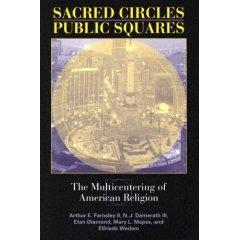
With each election cycle, disagreement over “real American values” seems to become shriller. How can we discuss the important issues facing the country without having it degenerate into mudslinging over values? Addressing this issue will be Art Farnsley, frequent researcher for Polis, author of many books and articles about religion and politics (including the splendid new Sacred Circles, Public Squares), and head of the American Values Alliance, a new organization created to defuse the self-destructive tendencies we see in so much of politics these days. Art is one of the good guys, and this should be a very good event.

It is part of the Mid-North Shepherd’s Center’s “Domestic Decisions 2005” series. Questions? Contact 317-924-0959 or mnscenter@aol.com

For more information… Look back more than four decades to Richard Hofstadter’s “Paranoid Style in American Politics,” and you’ll see today’s conflicts are not new at all. That is no reason for complacency: Hofstadter wrote in 1964, just as American politics began crumbling (for good and for ill). You can find a nice collection of resources and articles at a website called Beyond Intractability, which seeks to find novel solutions to apparently “intractable conflicts” in the US and the world.


If you like this event, check out …

An addition: Art's talk was excellent. A voice of provocative moderation. It was a most auspicious kick-off for the American Values Alliance. You can catch a tape of his talk on public access cable repeatedly at random times in the middle of the night; or contact Dotti Gerner at Mid-North Shepherd's Center to ask for a video of the talk. Or read it right here. This is a preliminary version, but it deserves an electronic home until http://www.valuesalliance.org/ gets up and runniing. I'll replace it with the version Art delivered when he sends it to me.

Shared American Values

The Problem: A Culture War

To hear the partisans talk, you might think that America has become irretrievably polarized. The June 10th Washington Post reported that Howard Dean, the Democratic Party Chair, said that he “hates Republicans and everything they stand for.” He has also said that “many of them have never made an honest living in their lives” and that Republicans are “pretty much a white Christian party”.

George W. Bush received 62 million votes in 2004 and was the first candidate since his father in 1988 to win an outright majority of the popular vote. Many of those 62 million voters must have been surprised to learn from Howard Dean that they were the idle rich. I suspect that a number of Democratic Senators who have never had to make an honest living cringed nervously.

I suppose most Republicans are of European descent and have Christian backgrounds. That’s true for the majority of Americans, though not so much for Ken Mehlman, the head of the Republican National Committee. His mother fed him kosher when he was growing up because she, at least, thought he was Jewish. But if your intention is to drive a wedge as deeply as possible, why hold back from saying that you “hate Republicans and everything they stand for.” After all, can you ever get too much distance from the “Party of Lincoln?”

On the other side, Republicans repeatedly make such blatantly polarizing claims that it is hard to choose a single example. But here’s one with local color: The June 21 Washington Post reported that Indiana congressman John Hostettler claimed "the long war on Christianity in America continues today on the floor of the House of Representatives" and "continues unabated with aid and comfort to those who would eradicate any vestige of our Christian heritage being supplied by the usual suspects, the Democrats." Not content to stop there, he went on: "Like a moth to a flame, Democrats can't help themselves when it comes to denigrating and demonizing Christians.”

Given that most Democratic Senators and Congress members have Christian roots and that Rep. Hostetler surely knows this, we’ll have to assume that he didn’t mean Democrats denigrate and demonize all Christians. He meant the kind he likes; you know, the “real” kind.

Statements like these from Dean and Hostetler are not debating points nor are they strands of a reasoned argument: they are fighting words. These partisans are certainly contesting elections, but they are also going far beyond that. They are waging a culture war, doing their best to elevate our disagreements about public policy to the level of a battle over the nature of right and wrong, good and evil.

And this is not simply a matter of academics using a catchy phrase like “culture wars” as a clever way to describe some minor disagreements. The partisans themselves see this as a battle. When reviewing Ralph Reed’s book, Active Faith: How Christians Are Changing the Soul of American Politics, Richard John Neuhaus was moved to say “the term culture war is not hyperbole.”

If you listen to the partisans long enough, you too will hear the martial language. Conservatives—especially the Biblical conservatives—claim that liberals are waging war on traditional values. Liberals—especially the kind who favor income redistribution as a way to advance economic equality—say that free-market conservatives are waging war on the poor.

A casual observer could easily come away with the idea that America has an unbridgeable chasm running down its middle. And, in fact, public debates are often framed as if this were the case. My distaste for Fox News, for instance, comes NOT from its tendency to offer a more conservative interpretation of the facts; you could reasonably argue that America needed a more conservative view of the facts, so Fox fills an important market niche. No, my bone to pick with Fox is that it presents issue after issue as a shouting match in which the only alternatives are two distant, rigid positions offered by shrill partisans at the top of their lungs.

If middle-Americans come to believe that the O’Reilly Factor represents how debates should be framed and how decisions must be made, then they must either choose sides or opt out of the conversation altogether. And you know as well as I do that this is what has happened. A relatively small number of citizens have chosen sides and dug in to defend their positions no matter what. For instance, on the very difficult issue of abortion they end up either arguing that no abortion is ever permissible under any circumstances, even though a vast majority of their fellow citizens disagree, or they argue that abortion must be a woman’s unfettered right at any time up until birth, which most people see as morally reprehensible. But time after time, this tendency to frame issues as right or wrong, all or nothing, good or evil, creates artificial dilemmas.

The partisans are so worried about the slippery slope that they are afraid to give an inch. Consequently, they waste all of our time defending that last, controversial, 5% of their arguments rather than building on the 95% where there is widespread agreement.

But that’s for the small percentage who have chosen sides and dug in. You know as well as I do that a much larger percentage of citizens have decided not to dig in on one side or the other and have no interest in fighting the culture war. So they either sit it out altogether or, when elections roll around, they choose their constellation of issues and vote accordingly. This is what is now known as “independence” and many people think it’s a good thing. Folks love to say “I vote for the candidate, not the party”. But I’m not so sure.

Obviously, I’m not arguing that America would be better if more people were hard-shelled partisans, but what passes for “independence” looks to me more like “non-involvement.” I wouldn’t want everyone signing a pledge to listen only to Rush Limbaugh or Al Franken, but I wouldn’t mind if more people were involved in the ongoing social dialogue because they saw it as a reasoned process involving evidence and fairness. The current state of widespread disengagement makes it much harder for people to think critically about a wide range of complex issues and therefore much easier for savvy salespeople like Karl Rove to put together a marketing strategy.

Forced to Choose: Whose Moral Values?

After the 2004 election, we were told that “values voters” made a big difference. As you all know, this referred to people who hold what are called “traditional” or “family” or “conservative Christian” values. Not to put too fine a point on it, but gay marriage and abortion became the litmus tests for “values”. Let’s be honest: many people are concerned that open acceptance of homosexuality somehow tears at our traditional moral fabric, whatever that may be exactly. And you are well aware that many people believe abortion is tantamount to killing unborn children, which is a claim so strong that it moves other considerations to the back burner.

It would be impossible to gather enough evidence to prove that these moral issues swung the 2004 election, especially with a war on, but it is easy to see why they exerted such pressure. If you truly believe that abortion is murder, then you are likely to believe there is something fundamentally wrong with the whole political or cultural worldview that surrounds it. What other issue could be important enough to sway you from this underlying conviction? If you equate liberalism with abortion, then you are likely to dismiss liberalism altogether.

I think gay marriage is less all-encompassing for most people; that is, they don’t feel nearly so strongly about it—but the easy part is, they don’t have to. All they have to do is vote for the status quo which, in this case, fits with their own worldview and their own personal comfort. Unless you are gay, then a vote for gay marriage is portrayed as a vote for principle, not for your own interests. When political debate is so polarized, the message to citizens is: “Vote your own interests and personal feelings; everyone else is.” In such an environment, gay marriage is a tough sell.

The coalition coalesced around these traditional moral concerns are now called “values voters,” and the politicians who pander to them claim a monopoly on values issues. But there’s a similar coalition on the political left that lays claim to the term “justice”. They demonize capitalism and the “big businesses” that profit from it. Populism runs deep in American culture—from academia to the working class to the genuinely poor—and Democratic or independent politicians—even wealthy ones—are not above using social class to drive the wedge when they can.

Speaking to the AFL-CIO this year, Senator Edward Kennedy said, “Make no mistake – there’s an organized movement against organized labor. This organized movement is called the Bush Administration, and it stands against working families – against fair wages – against decent health care – against Social Security – against the 40 hour work week -- and against over time pay. It stands against all the progress we’ve made in bringing fairness and justice to hard working families across America. Together, we will make clear that we have only just begun to fight.”

I could list as many examples of these class warfare gems from Democrats as I can “Christian values” classics from Republicans, but you don’t need me to. You already know that both sides are looking for a place to drive a wedge, so long as they can find a place that leaves 50%+1 of the voters on their side.

This way of conducting elections—indeed, this way of conducting our national policy dialogue—skews the results absurdly. Because we act as though we lack the language and the symbols to communicate our common values and common interests, we end up creating mythical poles of left and right, red state and blue state, that are much farther apart in our mental constructions than they usually are in real life. We caricature complex issues; in fact, candidates and their handlers do this on purpose. We turn every question into black and white, yes or no, up or down, and make it unnecessarily difficult to imagine a center that is widely shared but unprofitable for politicians.


The Way Forward: The Language of Shared American Values

I do not, of course, mean to suggest that the early 2000’s are the first time, or the worst time, in American history when it comes to politicians’ use of hyperbole and exaggeration to discredit their opponents and build their own coalitions. This is what Americans do. And a lot of what we hear—from Hostetler’s silly remarks on the House floor to Dean’s baseless bluster to Kennedy’s rallying call to labor to Republicans’ shameless exploitation of the Terry Shiavo case—is preaching to the choir. These tidbits are not really meant to advance policy debate for the broad public, but to mobilize the troops.

No, my fear is not that politicians will exaggerate in order to get their base jazzed up, my fear is that we as a culture and as a body politic risk losing our ability to talk about shared American values at precisely the time when a globalizing world economy calls us to acknowledge, defend, and promote the very values that define us. We do well to stop at this critical juncture in world history to consider what those values are.

Americans are fair. We disagree strongly about equality of outcome, but it is difficult to find an American who would not argue for equality of opportunity. We believe everyone deserves a fair shake before the law. For all that people whine about liberal judges letting the bad guys go, most Americans are willing to risk setting an occasional felon free to make sure that the innocent don’t go in.

Americans are tolerant. I know, I know: the Klan, failure to pass the Equal Rights Amendment, vehement reactions against gay marriage. But you cannot honestly look at our society and say that those are our defining features. No, America is defined by its gradual inclusion of immigrant groups that have always come and continue to come. America is defined by people who are willing to mind their own business and to assign basic civic, political freedoms even to people they disagree with or dislike.

Speaking with Tucker Carlson, the Rev. Jerry Falwell put it like this: “Civil rights for all Americans, black, white, red, yellow, the rich, poor, young, old, gay, straight, et cetera, is not a liberal or a conservative value. It‘s an American value that I would think that we pretty much all agree on." That’s fairness and tolerance rolled into one, especially coming from someone who liberals like to paint as the bad guy.

Americans are civil. Not always, of course, but we have it in us. I lived in Britain for 2 ½ years and I never stopped being taken aback when a reporter would try to trap a interviewee, especially a politician, with a loaded question. Americans would just find that rude. If you’ve ever seen the British arguing in the House of Commons and compared that to the floor of the US Congress, you know what I mean.

It is possible, of course, that Americans are too civil and that we sweep too much under the rug, but I far prefer this to the alternative. And in fact, I’m hopeful that this inbred civility might help save us from our current propensity to paint both sides in every debate as irreconcilable opponents.

I’m hopeful the recent confirmation of Judge John Roberts to the US Supreme Court might be an example of this civility playing out. Some noted Democrats voted “no” on Roberts as a strategic set-up for the next confirmation hearing, but the overall tone of this discussion was subdued even though many people expected Armageddon. President Bush was forced to put forward a high- quality, not-too-ideologically-motivated candidate and his opponents were forced to respond politely and reasonably because Americans would not have stood for too much exaggerated name-calling. This was too important.

After all, we still share an underlying sense that “the government” is an impartial, balanced mechanism, even when very partial, one-sided people are in it. In Europe, when people say “the government”, they mean the party in power. The other side is “the opposition”. But in America, we see the government as a thing that represents us all, no matter that it contains different proportions of Republicans and Democrats.

And we see the Supreme Court as fair and impartial even beyond that. I remember once hearing a British talking head say that the United States had a “Republican” Supreme Court and it just sounded odd. The Court must strive to be above politics and, the 2000 election decision notwithstanding, I think the justices generally agree on this point. We all insist that the ideal be impartiality, even as we cautiously guard against the reality of partisan interests.

Finally, Americans demand and respect evidence. Over the last couple of decades, our country has moved zealously in the direction of outcomes-based evaluation for pretty much everything. Admittedly, we don’t always agree about what counts as evidence. For instance, is ISTEP the best way to measure educational outcomes? Or on a much larger issue, do the millions of pieces of archaeological and now genetic evidence validate the general theories of natural selection and evolution? But many other times we do agree on what constitutes proof. We are a people who insist on hard evidence in courtroom trials and we are offended when that evidence seems to go unheeded.

These American values are cherished by billions of people around the world. But we Americans have a special advantage that cannot be overemphasized: we not only share these values, we have codified them in our founding documents. The Constitution, especially, serves as a covenant between ourselves, our ancestors, and our children to uphold and maintain these high ideals.

There are, to be sure, other values, encoded in other documents, that inform our way of life. Values from the Bible, for instance, mean different things to different people. The 10 Commandments have surely shaped our culture as they have all of western civilization. But even they are not universally shared, so when partisans try to use them to insist that certain core religious beliefs should govern everyone, our truly shared values of fairness, toleration, and civility kick back. Some may see this as a loss of traditional culture or a relativization of moral content; I see it as an attempt to build a system of values that could be embraced by a shrinking, globalizing, incredibly diverse and complex world.

Compared to grandiose claims about God’s Will or Armageddon or culture wars, the words don’t seem like all that much, do they? Fairness, toleration, civility, and respect for evidence; these are just common sense. But I believe their virtue lies in the fact that they are common. These are truly shared American values.

And so today I’m making a simple request: from now until the 2006 Congressional elections, every time you hear someone insist that their personal values should be the standard by which others are judged, ask yourself how those specific, particular values look through the lens of our shared, common values. Is the claim being made in the spirit of fairness, toleration, civility and respect for evidence? Is there room for reasonable people to disagree and to move forward toward some sort of mutually-acceptable resolution? Is the goal to find common ground, of which there is much, or to establish a beachhead by turning a point of genuine disagreement into a metaphor for the cosmic struggle between good and evil?

A small-but-growing group of us have now banded into an organization called the American Values Alliance in the hopes of raising these kinds of questions over and over. Whenever we see a politician use hyperbole or exaggeration in a way that engenders division, we will point it out. Whenever we see media ignoring evidence or pushing people toward incivility, we will call their hand. Whenever activists of any kind seek to drive a wedge between Americans, whether men or women, rich or poor, gay or straight, black or white, generations-old residents or relative newcomers, we will question their claim that what separates us is stronger than what unites us.

But we know it is not enough simply to react by pointing out where others are intentionally creating division. We hope to press for political reforms that make partisanship less profitable for its practitioners. For instance, we believe that an independent, non-partisan redistricting commision could do a MUCH better job at setting political boundaries than the current, highly partisan, system we have now.

Gerrymandering is a political sickness that far too many of us have come to accept as a normal part of politics. It creates non-competitive elections in which most candidates, even for jobs as important as the US House of Representatives, barely even have to run, much less to explain and defend their records. It is simply unfair. But only a genuinely non-partisan effort can really create this change, because both parties are too tightly-identified with their own interests. It is difficult to stir up non-partisan activism—it is disorganized by its very nature—but we’re going to give it a shot.

The best way to keep partisanship from paying, and to keep the culture war from spreading, is to eliminate the spoils of that war whenever possible. When citizens insist on institutions that are fair and evidence-based, and when they punish candidates who intentionally mislead and drive wedges rather than engaging in reasoned debate, then things change because they must.

Cynics would not bother to attempt these reforms, but starry-eyed idealists are unlikely to get far either. We know that no matter how civil the debate and how strong the presentation of evidence, people will still disagree about when human life begins or what distribution of income is fair. But surely no one here believes that either of those national debates are improved by choosing sides, digging in our heels, and screaming at one another across a line drawn in the sand. Each of us recognizes that a fair process of argument with respect both for evidence and for the fellow citizens on the other side will bring us closer to an agreement that everyone could live with.

I know the partisans think that “compromise” is a dirty word, but not me, because I know that the alternatives are “stalemate” at best and “war”at worst.

My goal, our goal, is to remain non-partisan, so today I am not asking you to support any party, to vote for or against any public spending, or to consider any candidate. I am only asking you to look inside yourself to see whether fairness, civility, toleration and respect for evidence are your values, values you share with hundreds of millions of other Americans and billions around the world.

If they are, then I hope you’ll join me in rejecting political ads that intentionally mislead, refusing to participate in push polls, insisting on media clarity, and ridiculing hyperbole, exaggeration, and wedge-driving whereever we see it. I hope you’ll insist that whenever possible, government—federal, state, or local—replace the spoils system with decisions based on fairness and competence. But most of all, I hope that every time you hear someone say that their values are pure, while those of their opponents are tainted, you’ll remind them of the core American values we all share. If we recognize that fairness, toleration, civility and respect for evidence unite us , and if we refuse to listen to, vote for, or donate one red cent to those who hope to profit by dividing us, then we can move toward the kind of political dialogue aimed at solving problems, not merely at winning elections.

Oct. 6-9: In Solidarity: Engaging Empire in Activism, Education and Community Strategies


A Peace and Justice Studies Association and Plowshares National Student Peace & Justice Conference

When: Thursday-6 October to Sunday 9 October

Where: Goshen College, Goshen IN

I am all for any serious treatment of the “New American Empire,” perhaps the most important topic facing us and the world today. Will this be serious? There’s a tension to this conference I am still trying to get my brain around. On the surface it would appear to be a typical — even stereotypical — leftie conference about American power (“It’s bad”). But there is also a celebration of the violent movement Weatherman Underground, which could make for an interesting session or two since the conference is being organized by pacifists. Here’s what the organizers promise:

In a post-911 world powered by a global matrix of multinational corporations, media outlets, renegade governments and military forces, where does one begin the processes to dismantle the systems of domination and oppression? What are the strategies, tactics and discourses for overturning the Empire? How can one effectively change the meta-narratives of imperialism and colonization? How does one engage racism/white supremacy/white privilege? What political options are available? What are the implications of Empire at home and abroad? What role does nonviolence play? How does one build local communities of solidarity and cultivate the grassroots culture? How does one connect with the world-wide solidarity movement?

Important themes, but could be kind of goofy. Judge for yourself by checking out the conference website for details.

Oct. 10: Global Communities, Local Transitions: The Promise and Risks of Central Indiana

A discussion of “glocalization” by John Clark

When: Monday 10 October, 7:00 PM

Where: Max Kade Room, The Athenaeum. 401 E. Michigan St. Indianapolis

This is the second of three talks I’ll be giving this fall about “glocalization,” the intersection of global and local processes and pressures. The Nationalities Council — itself comprised of more than 50 ethnic groups — is a great host for the topic. I’ll be talking about the past and future effects of immigration on a wide range of social problems (crime, poverty, education), and pointing to often neglected aspects of social strength that comes from strong and diverse communities. This is open to the public and features an “ethnic food of the month” … no cost, but you might want to get there around 6:45, I am told, before all of the goodies are gobbled. Questions? E-mail Josef Laposa at mpiety1831@earthlink.net

If you like this event, check out … some of the many upcoming events that look at immigration and assimilation. The discussion of “moving and staying in a multiethnic Indianapolis” should be particularly relevant.

My third talk about “glocalization” will deal with local higher education in flat world (to use Tom Friedman’s metaphor for hyper-globalization).

Thomas Barnett also uses the concept of “glocalization” in a different but complementary sense.

Oct. 11: Haiti: The International Community’s Dictatorship


Talk by Brian Concannon, Jr., Director, Institute for Justice & Democracy in Haiti

When: Tuesday 11 October, 7:00 PM

Where: Marian College, Allison Mansion, 3200 Cold Spring Rd. Indianapolis

Human rights lawyer and activist Brian Concannon Jr. directs the Institute for Justice & Democracy in Haiti (IJDH), which promotes human rights in Haiti by litigating cases in Haitian, U.S. and international courts, documenting human rights violations and working with grassroots activists in Haiti, North America and throughout the world. Mr. Concannon writes and speaks often about justice, human rights and democracy in Haiti. He has been featured in The New York Times, The Washington Post, CNN, Democracy Now! and radio and print media throughout the world. Mr. Concannon lived and worked in Haiti from 1995 to 2004, first with the United Nations, and after 1996 with the Bureau des Avocats Internationaux (BAI) in Port-au-Prince. The BAI was established by the elected Haitian government to help victims and the justice system prosecute human rights cases, mostly from Haiti’s 1991-1994 de facto military dictatorship. Mr. Concannon is a graduate of Georgetown University Law Center. He is a 2005-06 Wasserstein Public Interest Law Fellow at Harvard Law School, and held a Brandeis International Fellowship in Human Rights, Intervention and International Law from 2001-2003.

Sponsored by the Franciscan Center for Global Studies

If you like this event, check out …the discussion of what we can do to solve global poverty Fran Quigley and I will have November 3. In addition to his work directing the Indiana Civil Liberties Union, writing some of the best articles about poverty and justice in Indianapolis, and visiting Beirut (safely to my great relief), Fran is deeply engaged in Haitian issues. Now that I think about it, Fran and will also discuss torture at the ICLU conference: he will be con, I will (I’m afraid) be pro. On poverty and Haiti we should be much closer to each other.

Oct. 12: Finding consensus in a divided nation and state


Panel discussion of state politics with some of Indiana’s leading political journalists and politicians

When: Wednesday 12 October, 11:00AM — 12:30 PM

Where: North United Methodist Church, N. Meridian St. at 38th St.

An insiders’ discussion of politics as it plays out in the General Assembly. Panelists will include Matthew Tully, political editor of the Indianapolis Star; Bill Crawford (House Democratic member), and Larry Buell (House Republican member). Jim Shella, host and producer of Indiana Week in Review, will moderate the discussion.

If you like this event, check out …how our local political experts and policymakers compare to national figures such as Bill Bradley and George Will the next night, or David Halberstam and Anne Quinlan the night after that, or the perky Soledad O’Brien two weeks later. My predictions: (1) the crowds at Butler will be bigger than the nice people in the basement of the North United Methodist Church; (2) the local experts will be funnier than the national experts (by a very big margin); (3) the national figures will be better coifed and manicured than the Hoosiers (probably by an equally large margin).

Part of the Mid-North Shepherd’s Center “Domestic Decisions 2005” series. Questions? Contact 317-924-0959 or mnscenter@aol.com

Oct. 13: A Conversation with George Will and Bill Bradley


Presentation of ideas with pundit and former politician

When: Thursday 13 October, 7:30 PM

Where: Butler University, Clowes Hall, 4602 Sunset Ave. Indianapolis

One of the world's most widely-respected and read journalists, George Will writes columns for Newsweek and The Washington Post, is syndicated in about 500 newspapers, and won the Pulitzer Prize for his work in 1997. He has provided commentary on ABC's Sunday morning show, This Week since 1981. Two-time All-American and captain of the 1964 gold-medal-winning U.S. Olympic men's basketball team, Bill Bradley chose a Rhodes Scholarship over the NBA, studying politics and philosophy at Oxford University before returning to join the New York Knicks for the next decade. He was later inducted into the Basketball Hall of Fame and served in the U.S. Senate for 18 years.

Presented by Butler University 150th Anniversary Celebration

If you like this event, check out …Jean Bethke Elshtain the next night. You should go not just because Elshtain is smarter than Will and Bradley combined. She will discuss something Will and Bradley claim to be: a public intellectual. You should judge whether they meet standards she discusses and exemplifies.

Oct. 14: A Conversation with Anna Quinlin and David Halberstam


Wide-ranging discussion with two Pulitzer Prize winning giants of journalism

When: Friday 14 October, 7:00 PM

Where: Butler University, Clowes Hall, 4602 Sunset Ave. Indianapolis

Anna Quindlen is the best selling author of four novels, four nonfiction books and two children’s books. Her New York Times column, Public and Private won the Pulitzer Prize in 1992. Her column now appears every other week in Newsweek. One of the most distinguished social and political commentators in America, David Halberstam won a Pulitzer Prize at age 30 for his prophetic reporting in the early days of the Vietnam War. Demonstrating the breadth and broad appeal of his work, five of his 14 bestsellers have been about sports.

Presented by Butler University 150th Anniversary Celebration

Oct. 15: “From Guantanamo to the Statehouse: Human Rights in 2005” -- ICLU annual conference and dinner


The Indiana Supreme Court Commission on Race and Gender Fairness has very generously invited ICLU Conference attendees to a distinguished lecture featuring Civil Rights Activist and Entertainer/Musician Harry Belafonte. Click here to read about Mr. Belafonte's dedication to civil rights and the 2005 Diversity Summit.The cost and transportation of attending this event is included in the price of conference registration.

  • Entire conference plus dinner with Lucas Guttentag — $150
  • Conference without dinner but with talk by Sherri Belafonte's dad — $10 students, $25 non-students

The plan is to board buses from the Hilton (with, it seems, box lunches provided on the way), drive over to the magnificent Madame Walker Theatre, hear one of the great lions of civil and human rights talk, the go back to the buses to return to the Hilton for the afternoon panels. Last year I was the after-lunch speaker at the ICLU conference ... this puts me in pretty good company, along with Mr. Harry Belafonte. It is a boon to me this year since I am on the post-Belafonte afternoon panel, making an argument about how and when torture is justifiable, chances are everyone will be so buzzed by Belafonte that they will not pummel me too badly.

A wide array of talks and panel discussions about the war on terror, student rights, religious freedoms, reproductive freedoms, and more ... plus a justification of torture?

When: Saturday 15 October all day

Where: Downtown Hilton Hotel, 120 West Market St. Indianapolis

This ought to be a great day put on by the Indiana Civil Liberties Union, crammed full of big issues and controversy. Check out the schedule. Highlights include the plenary speech by Pierre Atlas on “The US and the Universal Declaration on Human Rights;” panels on student rights, race and criminal justice, religious freedom, reproductive freedom, and LGBT rights. The keynote speaker at dinner will be Lucas Guttentag, creator of the American Civil Liberties Immigration Rights Program and attorney for the Abu Ghreib and Afghan torture victims. I’ll be at the conference, debating with ICLU executive director Fran Quigley about the use of torture … I’ll be trying to develop a novel (but I am afraid unworkable) set of principles that could govern when and how torture is justified, and thus how to balance security and the protection of human/civil rights. Not sure I agree with the position I’ll be staking out, and it certainly won’t be a popular with the group attending the conference … That means putting in a lot of work in the next month if I don’t want to be battered senseless by a bunch of civil libertarians.

Oct. 18: Gaining that Competitive Edge — Global Sourcing


Lecture by Bob Parrin, Director, International Leverage LLC

When: Tuesday 18 October, 11:30 AM—1:15 PM

Where: Omni Severin Hotel Downtown Jennings Ballroom 40 W. Jackson Pl. Indianapolis

A World Trade Club event

Robin Parrin's career has included over 25 years in senior management positions with Sterling Fluid Systems, a multi-national corporation, in its rotating equipment and engineered systems businesses under the trade names Peerless Pump, LaBour, SIHI Pump, Hayward Tyler and Berkefeld. Assignments have included division management in the USA, Canada, and Mexico as well as group management of Latin America and corporate Business Development. He is currently a director of International Leverage LLC, a consultancy specializing in commercialization of new technology and international market and sourcing development.
Highlights of his career include market-driven strategic alliance development; acquisitions in the USA and Europe; distribution channel assessment and development; start-up of a wholly owned subsidiary in Mexico, corporate-wide global procurement negotiations; offshore sourcing initiatives in China, Korea, India, Brazil and Mexico; design and implementation of lean manufacturing initiatives; and development of E-commerce process improvements. He has broad market experience having covered the industrial, power, commercial, municipal, agricultural, and food and beverage sectors.
Mr. Parrin serves as an officer and board member of the Hydraulic Institute, the North American pump industry’s standards writing trade organization, and is immediate past President and current Chairman of the Board. In addition he serves at Purdue University as a board member for Herrick labs, Graduate School of Mechanical Engineering and on the Industry Advisory Council for the University’s Technical Assistance Program. He is a member of the Indiana Venture Club.

Registration and social time from 11:30am to Noon.
Event Cost:

  • $30 for members
  • $40 for non-members
  • $25 for full-time students

To make a reservation:

Oct. 19: Animals in Translation: Using the Mysteries of Autism to Decode Animal Behavior

A discussion of animals, intelligence, and autism by Temple Grandin, associate professor of animal science, Colorado State University

When: Wednesday 19 October, 7:30 PM

Where: Butler University, Atherton Union Reilly Room

Dr. Temple Grandin has used her experiences as an autistic person to understand the behavior of domestic animals, claiming that autistic people can often think the way animals think. She will discuss her latest book, Animals in Translation: Using the Mysteries of Autism to Decode Animal Behavior. Dr. Grandin may be one of the most accomplished and well-known adults with autism in the world. She has shared her life experiences and outlook on major television programs including “Today,” “Larry King Live” and “20/20” and has been featured in national publications including Time, USNews & World Report and the New York Times.

Butler University J. James Woods Lectures in the Sciences and Mathematics Series. Free and open to the public.

Oct. 19: Consequences of Cuts to City Services in Indianapolis


An explanation by Steve Campbell, Deputy Mayor of Indianapolis

When: Wednesday 19 October, 11:00 AM – 12:30 PM

Where: North United Methodist Church, N. Meridian St. at 38th St. Indianapolis

Balancing the city’s budget while maintaining public safety and neighborhood services requires substantial government reform in addition to luck and skill. Toss into the mix such wildcards as a new stadium for the Colts, a reorganization of services through Unigov II, and the uncertainties facing all local economies, and you have a very tough job for a Deputy Mayor. Steve Campbell has had that job since January of this year. He oversees the city's communications and marketing operations and the city's neighborhood services and affairs. He also concentrates on efforts to market Indianapolis nationally and internationally as an economic development hub and convention and tourism destination.

Part of the Mid-North Shepherd’s Center’s “Domestic Decisions 2005” series. Questions? Contact 317-924-0959 or mnscenter@aol.com

Oct. 20: The Japan-US Partnership - Its Significance in the Global Context

A talk by Yutaka Yoshizawa, Consul General of Japan at Chicago

When: Thursday 20 October, 7:00-8:30 PM

Where: Marian College, Allison Mansion, 3200 Cold Spring Rd. Indianapolis

Since April of 2004, Mr. Yoshizawa has been Consul General of Japan at Chicago. This is Mr. Yoshizawa's third posting in the United States, having served as an economic officer at the Embassy in Washington, DC from 1985 to 1987 and as a public relations officer at the Consulate in New York City from 1993 to 1996. Mr. Yoshizawa has nearly three decades of experience in foreign service. After graduating from the Faculty of Law at the University of Tokyo, he entered Japan’s Ministry of Foreign Affairs. He then spent two years at the University of Oxford as part of the Ministry’s training program. Other than the United States, he has served at the Japanese Embassies in New Delhi, India, Pretoria, South Africa, and Beijing, China. His assignments in Japan have included Director of the Human Rights and Refugee Division of the Foreign Ministry and Cabinet Councilor in charge of the drafting of legislation for Japan’s participation in UN Peace Keeping Operations. Until April of 2004, he was Managing Director in the General Affairs Department of the Japan Foundation, an organization in charge of international cultural exchange.

Sponsored by the Franciscan Center for Global Studies, the Japan-America Society of Indiana and the Sagamore Institute for Policy Research.

Oct. 24: The United Nations, Democracies, and Civil Liberties: Can We Learn Lessons for the Struggle against Extremism

A panel discussion with Fran Quigley (executive director of the Indiana Civil Liberties Union), Pierre Atlas (director of Marian College’s Franciscan Center for Global Studies) and John Clark (Sagamore Institute)

When: Monday 24 October, 7:00 PM

Where: North United Methodist Church, N. Meridian St. at 38th St. Indianapolis

October 24 is United Nations Day … how much more controversial can you get in Red-State America? I’ll be joined by two of the area’s brightest and most decent experts on human rights, civil liberties, and international relations: Pierre Atlas of Marian College and Fran Quigley of the Indiana Civil Liberties Union. We will discuss how other countries facing terrorist threats are handling the delicate balance of freedom and security. We have seen our closest legal cousins, the British, adopt very harsh measures in the wake of the London subway bombings of 7/7. How are other European democracies coping with the threat from extremism? Can the US learn lessons form them? Does the United Nations provide guidance, or does it only stand as an obstacle to protecting ourselves and the world effectively?

I hope I find some answers to these questions before being thrust in front of a crowd with such smart guys as Pierre and Fran; I am certain I will know a lot more by the time the event is finished.

Sponsored by the League of Women Voters of Indiana, the Indiana Civil Liberties Union, the Franciscan Center for Global Studies, and the Sagamore Institute. Questions? E-mail me at john@sipr.org.

Oct. 25: Theology in Contemporary Music: Its Source May Surprise You


A conversation with contemporary Christian music star Gloria Gaither and Mark Hulsether, professor of religion and American studies at the University of Tennessee in Knoxville

When: Tuesday 25 October, 7:00-9:-00 PM

Where: Butler University, Clowes Hall, 4602 Sunset Ave. Indianapolis

Gloria Gaither and her husband Bill were hailed as “Songwriters Of The Century” by the American Society of Composers and Publishers. Reputable not only as a songwriter and speaker, Gloria Gaither has come to be known as a stateswoman in the field of Christian ministry. She directs videos, writes proposals, and procures funding for the Coalition for Christian Colleges and Universities. The books, lyrics, and speeches she has written have come not from some spiritual guru or saint, but from Gloria's struggle with her own insecurities, difficulties, and heavy work load which have helped to strengthen her faith. In collaboration with her husband, Gloria has written over 600 songs, has 60 recordings, been recipient of numerous awards, written twelve musicals and a collection of books. Dr. Mark Hulsether attained his Ph.D at the University of Minnesota, 1992, in American Studies. He is a recipient of the Research Grant, Understandings of US National Identity in a Global Perspective, Interdisciplinary Program in Global Studies, University of Tennessee, 2004. He has authored several articles and books, including "New Approaches to the Study of Religion and Culture," forthcoming in New Approaches to the Study of Religion, ed. Peter Antes, Armin Geertz, and Randi Warne (Berlin: Verlag de Gruyter) and "Religion and Culture," forthcoming in The Routledge Companion to the Study of Religion, ed. John Hinnells (New York: Routledge).

Sponsored by Butler University’s Center for Faith and Vocation Lecture Series.

Oct. 26: Separation of Church and State

A talk by Fran Quigley, executive director of the Indiana Civil Liberties Union

When: Wednesday 26 October, 11:00 AM -12:30 PM

Where: North United Methodist Church, N. Meridian St. at 38th St. Indianapolis

Fran Quigley is very well-positioned to explain the controversies over religion that are dividing our society these days. The ICLU has filed an important lawsuit against the Indiana General Assembly to block legislative session prayers that are too Jesus-oriented. In addition wearing his lawyer hat when he is directing the Indiana Civil Liberties Union, Fran is a journalist who writes frequently and well about civil liberties, local injustices and global poverty.

Part of the Mid-North Shepherd’s Center’s “Decisions 2005” series. Questions? Contact 317-924-0959 or mnscenter@aol.com

Oct. 26: Soledad O'Brien on "Diversity: On TV, Behind the Scenes and In Our Lives"


CNN anchor Soledad O’Brien discusses her work and background

When: Wednesday 26 October, 7:30 PM

Where: Butler University, Clowes Hall, 4602 Sunset Ave. Indianapolis

Morning viewers of CNN know Soledad O’Brien very well, perhaps in the overly intimate and overly fluffy fashion of morning news these days, they know her a bit too well. She is a distinguished journalist who brings a unique heritage of Latino, Irish and African-American cultures to the microphone. With this global perspective, she shares with audiences her role as a woman in the media and her road to success in the sometimes cut-throat TV news business. Balancing motherhood with her fulltime career, she is the former host of NBC's Weekend Today show, MSNBC's Morning Blend, and reporter for NBC Nightly News. O'Brien has covered such notable stories as the school shootings in Colorado and Oregon, Taliban prisoners held at Guantanamo Bay, Cuba, and the terrorist attacks on the World Trade Center from Ground Zero. The event is free but requires tickets, which are available at the Clowes box office after September 16.

A Hallmark event of Butler's Hispanic Heritage Celebration, The Celebration of Diversity Distinguished Lecture Series is a collaborative diversity initiative between Butler University and the Office of the Mayor, with generous support from the Eli Lilly and Company Foundation, Vectren Corporation, Anthem Blue Cross Blue Shield, Allison Transmission, Citizens Gas, Kroger, and Duke Realty Corporation.

Welcome to IndyBuzz

IndyBuzz provides information about Central Indiana's most stimulating and thought provoking events -- discussions and conferences, art exhibitions, films, music performances. It tells you what's happening … explains why you should be part of what’s happening. More than an events calendar, though, IndyBuzz tries to make events more meaningful for participants by suggesting an article or two to read before the event, recommending books or websites that will be sources of further information after the event, and pointing out related events that are worth attending.

Visit IndyBuzz's sister site, http://www.provocate.org/, which provides a context for the clusters of the events discussed in IndyBuzz.

Who is IndyBuzz?

Provocate strengthens the intellectual and civic fabric of Central Indiana by connecting global & local, entertainment & education, culture & policy